Key takeaways
- Coastal is a look, not a rating. White finishes, weathered wood tones and woven textures say nothing about how a fan resists salt.
- Salt attacks the small parts first. Screws, blade brackets, light sockets and the receiver usually show corrosion before the housing does.
- Indoor, covered outdoor and outdoor ratings are about moisture. No Breezary listing claims a salt-air or marine-grade rating, so do not treat any model as salt-spray proof.
- Verify before you buy. Read the location rating, manual and warranty terms, and ask customer service about a coastal installation.
Are Coastal Ceiling Fans Made for Salt Air?
Not by default. "Coastal" describes how a fan looks, while salt-air protection depends on its materials, coatings, hardware and location rating. A fan can look perfect for a beach house and still be rated for dry indoor rooms only.
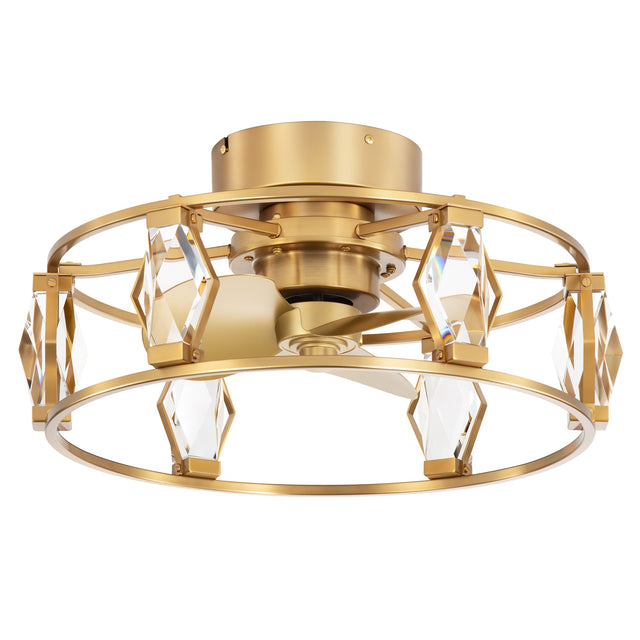
Shopping categories group fans by style: white and distressed finishes, pale or weathered wood tones, rattan-look cages and light, airy shapes. Those choices suit a beach cottage, but none of them is a test result. A fan built for a dry bedroom can look exactly as coastal as a fan meant for a porch.
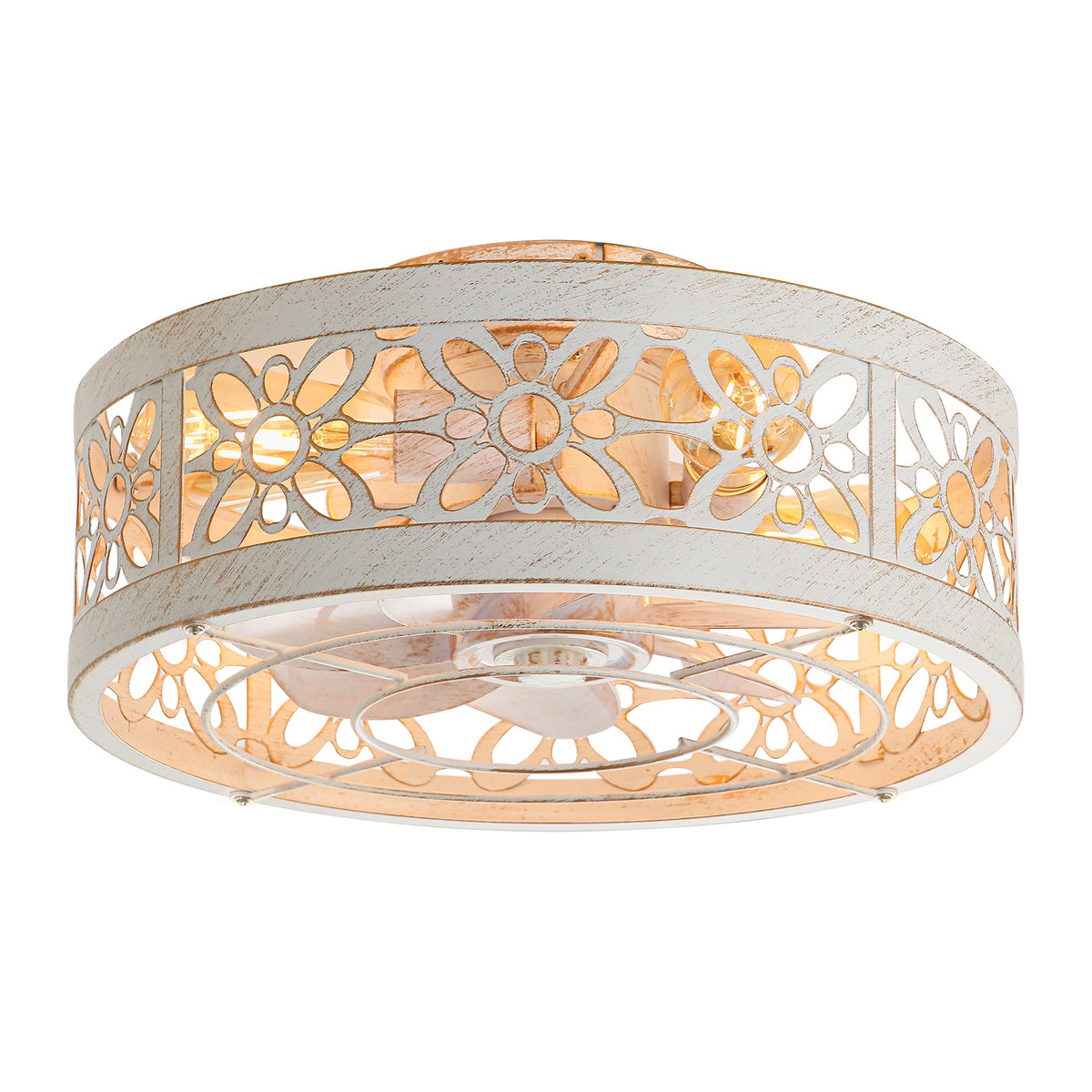
Breezary's coastal ceiling fans with lights collection is a good example of style first. It includes the Aeron 52-Inch 5-Blade Crystal Ceiling Fan with Light, whose light-gray plywood blades have a washed, driftwood feel, and the distressed-white Roson 16.5-Inch Vintage White Ceiling Fan With Light & Remote. Both are listed for Indoor use, and the Aeron description says "For dry indoor use."
Check first: on any product page, find the Use Location line in the specifications and read the description and manual for a damp or wet rating before you think about where the fan will hang.
How Does Salt Air Damage a Ceiling Fan?
Salt settles on surfaces as a fine film that holds moisture, and that damp, salty layer speeds up rust and corrosion on metal and electrical contacts. The small parts usually go first.
Homes near the ocean get salt in the air even on calm days. It collects on anything that stays put, and a ceiling fan on a porch or in an open beach room is a good place for it to build up. When humidity rises, the salt film draws in moisture and keeps metal surfaces wet longer than ordinary humidity would.
Where to look for early corrosion
- Screws and fasteners. Blade screws, bracket screws and canopy screws are small, often plain steel and easy to scratch. Rust here can weaken the connection that holds a blade on.
- Blade brackets and the mounting bracket. These carry the fan's weight and spinning load, so corrosion matters more here than on decorative trim.
- Finish edges and scratches. Painted or powder-coated metal protects well until the coating is chipped. Corrosion often starts at an edge, a scratch or a seam.
- Light sockets and connectors. Bulb sockets, wire connectors and integrated LED contacts can corrode, which can show up as flickering or a light that stops working.
- The receiver and motor electronics. DC fans rely on a receiver and control board. Moisture and salt on circuit boards can cause failures that look like remote or speed problems.
Wood-based blades react to coastal humidity differently. They will not rust, but plywood and MDF can swell or delaminate if they stay damp. For more on natural and woven materials, see rattan, wicker and bamboo ceiling fan materials.
Dry, Damp and Wet Ratings: What They Do and Don't Cover
Location ratings tell you how much moisture a fan is built to handle. They do not measure salt corrosion, so a damp or wet rating is a minimum for a coastal porch, not proof the fan will last there.
In the US, ceiling fans are commonly described with three location types. A dry location is a normal indoor room. A damp location is protected from direct rain but sees humidity and condensation, like a covered porch. A wet location can take direct water from rain or spray. Breezary product specifications use the labels Indoor, Covered Outdoor and Outdoor, and many descriptions add whether a damp or wet rating is stated in the manual.
| Breezary listing label | Typical place | What it does not tell you |
|---|---|---|
| Indoor | Bedrooms, living rooms and other dry rooms | Whether it tolerates sea air through open windows |
| Covered Outdoor | Porches and patios with a roof overhead | Whether a damp rating is stated in the manual, or how it handles salt |
| Outdoor | Areas that may see rain or splashing | How the finish, hardware and electronics resist salt corrosion over time |
Read the description as well as the label. Some Breezary listings say outright that no damp or wet rating has been published for the model, and the description and manual are the more specific source. For the basics of choosing by room, see how to choose a ceiling fan with light.
IP ratings are not salt ratings either
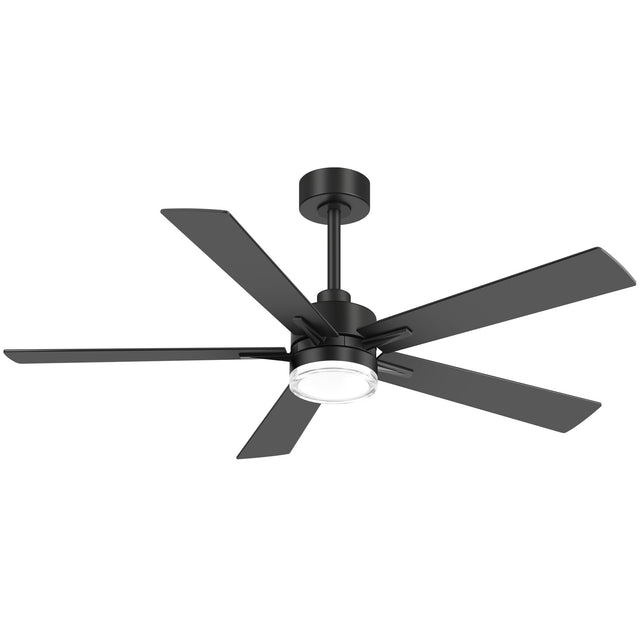
The Seravo 42/52-Inch Outdoor Ceiling Fan With Light lists Indoor, Covered Outdoor and Outdoor use, and its description refers to an IP44 setup with a keyed cable connector. IP44 covers small solid objects and splashing water. It is a useful moisture spec, but it does not describe how metal parts hold up to salt. The Kelon 42-Inch Outdoor Ceiling Fan With Light likewise asks you to confirm that your site's damp or wet requirements match the model's approved rating before exposing it to moisture.
Which Materials, Coatings and Light Parts Matter Near the Ocean?
Look at every part that will be exposed: the housing and its finish, the blade material, the hardware, and the light kit. A fan holds up only as well as its weakest exposed part.
Housing and finish
Most Breezary fans have a metal body with a painted or coated finish such as matte black, chrome or distressed white. A tough, unbroken coating protects the metal underneath, but salt finds chips and seams. Distressed finishes are a style choice; the worn look does not make them more or less protective. For how common finishes age, see ceiling fan finishes: brass, bronze, nickel and chrome.
Blades
Plastic blades, such as the ABS blades on the Roson and the Arachne 16.5" Vintage White Flush Mount Ceiling Fan with Light, do not rust. They still depend on metal screws and brackets. Plywood blades, like the Aeron's, need to stay out of persistent damp.
Light components
- Bulb sockets. Fans with replaceable bulbs, like the Aeron's three E12 sockets or the Roson's four bulb sockets, have exposed metal contacts.
- Integrated LEDs. These have no socket to corrode, but they depend on a driver and connectors inside the fixture.
- Cages and shades. Metal cages and decorative frames are more surface for salt to collect on. Glass and acrylic shades will not corrode, though their metal fittings can.
What to Verify Before Buying a Fan for a Coastal Home
Treat every coastal fan purchase as a checklist: where it will hang, what the listing and manual allow, what it is made of, and what the warranty covers. If any answer is unclear, ask before you order.
- Describe the spot honestly. An interior room with closed windows, a screened porch and a deck that gets ocean spray are three different exposures.
- Match the location label. Use Indoor fans in dry rooms. For covered spaces, look for Covered Outdoor or Outdoor in the specifications and a damp or wet statement in the description or manual.
- Look at the exposed parts. Note the housing finish, blade material, hardware and light type.
- Read the warranty. Breezary covers the motor with a limited lifetime warranty and fan parts, the light kit and LED modules with a one-year limited warranty. It applies to the original purchaser, for products bought from Breezary.com or an authorized retailer and installed in the US.
- Ask about your exact location. No Breezary listing claims a salt-air or marine-grade rating, so we do not recommend any model for salt-spray exposure. Call 707-249-3725 or email support@breezary.com with the model and a short description of the spot.
Check first: if you can taste salt on your lips on the porch or see a film on the windows, plan for salt exposure even if the space has a roof.
How to Care for a Ceiling Fan Near the Beach
Regular fresh-water wipe-downs and hardware checks slow corrosion and catch problems early. Always turn the power off first.
- Wipe, then dry. With the fan off at the wall and breaker, wipe the housing, blades, canopy and light cage with a cloth dampened in fresh water, then dry them. Do not spray water at the motor or light.
- Check hardware. Look at blade screws, bracket screws and the canopy for rust stains, flaking or looseness.
- Watch for warning signs. A new wobble, flickering light, a remote that stops responding or rust streaks under a screw head are reasons to inspect more closely.
- Stop when it matters. If a blade bracket, the mounting bracket or the outlet box shows corrosion, stop using the fan and have it checked by a qualified electrician.
Salt exposure is one of several factors in how long a fan lasts; see how long ceiling fans with lights last for the others.
Want a coastal look for an indoor room?
View coastal ceiling fansCoastal Ceiling Fans FAQ
Are coastal ceiling fans made for salt air?
Not necessarily. "Coastal" describes a look, such as white or weathered finishes, light wood tones and woven textures. Salt-air protection depends on materials, coatings, hardware and the fan's location rating, which you have to check separately.
Can I use a covered outdoor or damp-rated fan on an oceanfront porch?
A covered or damp location rating is about moisture, not salt. It does not tell you how the finish, fasteners or electronics hold up to salt spray. Breezary does not list any model with a salt-air or marine-grade rating, so contact customer service at 707-249-3725 or support@breezary.com before buying for a porch that gets ocean spray.
Does an IP44 rating mean a fan is corrosion resistant?
No. IP44 describes protection against small solid objects and splashing water. It says nothing about how metal parts resist salt corrosion over time.
Does the Breezary warranty cover rust from salt air?
The Breezary warranty gives the motor a limited lifetime warranty and fan parts, light kits and LED modules a one-year limited warranty, for the original purchaser of products bought from Breezary.com or an authorized retailer and installed in the US. Coverage terms apply as written on the warranty page, so ask customer service how they apply to a coastal installation before you buy.
How do I slow down corrosion on a fan near the beach?
Turn the power off, then wipe the housing, blades, light cage and canopy with a cloth dampened in fresh water every few weeks, and dry them. Check screws and blade brackets for rust or looseness, and stop using the fan if any support part is corroded.
Does salt-air protection mean a fan can handle storms and hurricane winds?
No. Corrosion resistance and wind resistance are different things, and no Breezary listing gives a wind or storm rating, so we make no wind-resistance claims for any model. Before a storm, follow your manual and local emergency guidance; if you take the blades down, turn the power off at the breaker first and keep each blade with its screws so the set goes back the same way. After a storm, have a soaked or damaged fan checked before you switch it on.