Key takeaways
- Tiffany-style is a look. It does not tell you whether a shade is cut glass, painted glass or plastic.
- Read the listing. Tiffara lists a Tiffany-style glass shade; Nerova, in the same collection, lists an acrylic shade.
- Dark when off is normal. Art glass is meant to be seen with light passing through it.
- Dust, do not scrub. Skip ammonia cleaners and abrasives on glass and acrylic alike.
Is a Tiffany Ceiling Fan Shade Real Stained Glass or Plastic?
It depends on the fan. "Tiffany-style" describes a look based on the leaded art-glass lamps of Tiffany Studios; it does not tell you how a shade is made. Some are pieced from cut colored glass, some are painted glass, and some are plastic.
So the useful question is what each listing actually says. Breezary's Tiffany collection currently has two fans, and they are quite different:
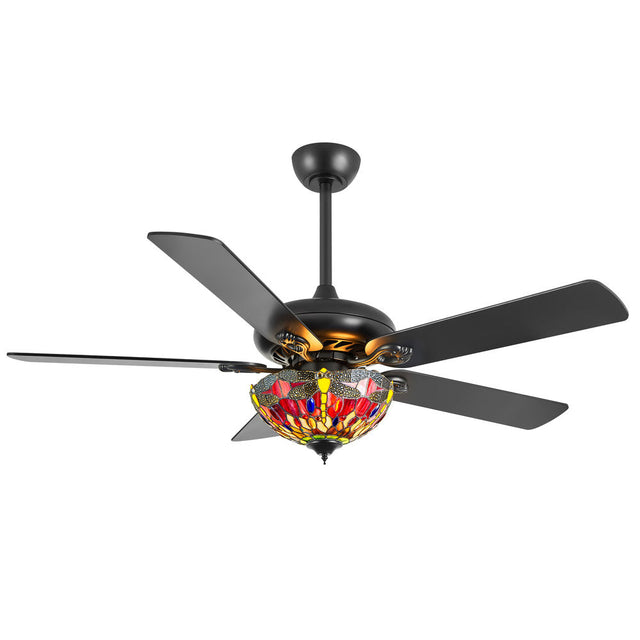
| Tiffara 52 Inch Black 5 Blade Tiffany Ceiling Fan With Light | Nerova 48/52" 5-Blade Ceiling Fan With Light & Remote | |
|---|---|---|
| Shade material listed | Glass | Acrylic |
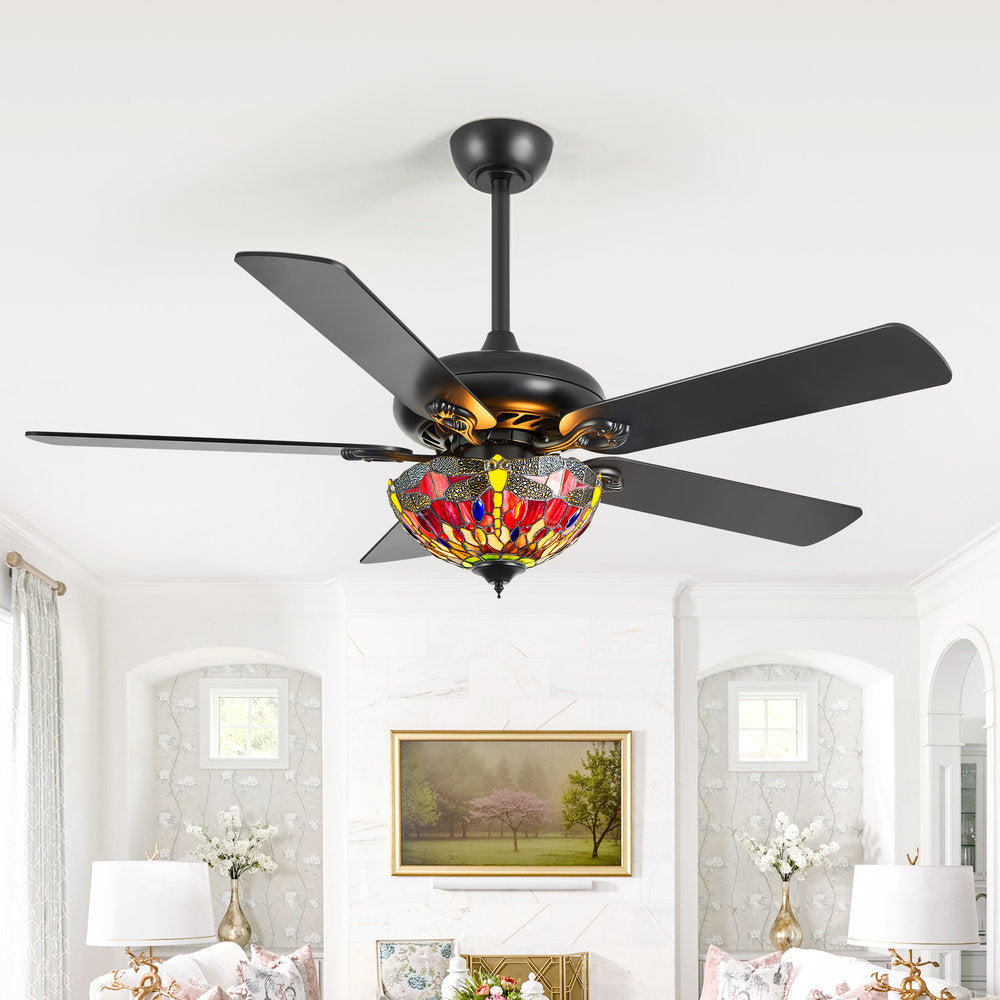
| What the listing says | "Colorful dragonfly-pattern Tiffany-style glass shade" | Round acrylic light over a 24W integrated LED |
| Light source | Two E26 sockets, up to 10W per bulb, not dimmable | Integrated LED, 3000K / 4000K / 6000K, not dimmable |
| Not stated | Hand-cut pieces, copper foil, painted color or any surface coating | Not applicable: it is not a stained-glass shade |
We describe Tiffara's shade the way the listing does: a Tiffany-style glass shade with dragonfly artwork. We have not confirmed how it is constructed, so this guide does not claim it is hand-cut or copper-foiled. If that detail matters to you, ask customer service before ordering: 707-249-3725 or support@breezary.com.
Nerova is in the collection for its look, but its shade is acrylic, a clear or frosted plastic diffuser. It is not stained glass, and it should be cleaned as plastic.
What Does "Tiffany-Style" Mean?
It means a shade designed in the manner of the leaded-glass lamps made by Tiffany Studios in New York around 1900: many small pieces of colored glass forming patterns from nature.
At Tiffany Studios, Clara Driscoll supervised the Women's Glass Cutting Department from 1892, according to the Morse Museum of American Art. Her team chose sheets of glass, cut pieces from templates and wrapped their edges in copper foil; the pieces were then soldered together over molds. The New-York Historical Society describes the Dragonfly lamp in its collection, dated about 1900 to 1906, as most likely designed by Driscoll.
That is why the dragonfly is still such a familiar Tiffany-style motif, including on the Tiffara. Original Tiffany Studios lamps are collected as antiques; a new fixture sold today is Tiffany-style. For telling true antiques from reproductions, see vintage vs antique vs retro ceiling fans.
What Does "Copper Foil Construction" Mean?
Each piece of glass has its edge wrapped in a thin strip of copper foil, the pieces are fitted together, and solder is run along every seam to join them into one shade.
Copper foil allows smaller pieces and tighter curves than lead came, the H-shaped lead strips used in many church and house windows. That is what makes detailed wings, petals and domed shapes possible. The seams you see on a leaded shade are lines of solder, often darkened with a patina so they read as bronze or black.
When a listing says "copper foil," "leaded" or "hand-cut," it is describing this construction. When it says only "glass shade," as Tiffara's does, the construction has not been specified.
What Are Cabochons, Rippled Glass and Striated Glass?
They are names for kinds of art glass used in Tiffany-style shades, each chosen to catch or bend light in a particular way.
- Cabochons or jewels: small rounded or pressed glass pieces set into a shade like gems, adding points of sparkle to a design.
- Rippled glass: sheet glass with a wavy surface. The Neustadt Collection of Tiffany Glass describes ripple glass as a sculptural glass Tiffany used to suggest water.
- Striated or streaky glass: glass with streaks of color running through the sheet, good for leaves, grass and wings.
- Opalescent glass: milky glass that glows when lit and looks opaque when dark. It was the base of the glass Tiffany made.
- Drapery and confetti glass: folded glass that imitates fabric, and glass flecked with multicolored chips, both found in the Neustadt's archive of original Tiffany glass.
Breezary's Tiffara listing does not name the glass types in its shade.
Why Does a Tiffany Shade Look Darker When the Light Is Off?
Colored art glass is designed to be seen with light shining through it. Switched off, you only see light bouncing off the surface, so colors look deep, muted and sometimes almost brown.
Opalescent and densely colored pieces change the most, because they block a lot of light. Turn the bulbs on and the reds, ambers and blues come forward. The bulb color matters too: warm white makes the glass look golden, while a cooler white shifts it toward blue. Tiffara takes two E26 bulbs of up to 10W each; for bulb color temperature and brightness, see our ceiling fan lighting options guide.
An acrylic diffuser like Nerova's behaves differently. It looks white or pale when off and glows evenly when on, without the shifting color of art glass.
Why Do Two Tiffany Shades Never Look Exactly the Same?
On shades pieced from art glass, every sheet varies in color and streaking, and each piece is cut from a different spot. Two shades of the same design will not match exactly.
Painted or molded shades repeat far more evenly. The Tiffara listing does not say how much one shade may vary from another, so if you are buying two for the same room and need them to match, ask customer service first.
Why is there an oily film on a new shade?
Solder can tarnish to a white film, and lighting maker Quoizel's care guide (checked 2026) recommends a light coat of lemon oil on solder to remove and prevent it. Some makers oil leaded shades before shipping, so a faint film on a new leaded shade can be normal. Breezary's listing does not mention any coating on the Tiffara; if you see a film, wipe it with a dry, soft cloth, and contact customer service if it is sticky or keeps returning.
How Do You Clean a Tiffany Shade Without Damaging It?
Dust it gently and keep chemicals away. A soft feather duster is safe for glass and acrylic alike; ammonia cleaners, abrasives and soaking are not.
- Turn the light off and let the bulbs and shade cool completely.
- Remove dust with a soft feather duster or a clean, soft brush, using light strokes rather than rubbing.
- For an acrylic diffuser such as Nerova's, Spartech's acrylic cleaning guide (2020) recommends mild soap and lukewarm water on a soft microfiber cloth, then drying with a soft cloth.
- For a decorative glass shade such as Tiffara's, stay with dry dusting unless your manual or customer service approves damp cleaning, because the listing does not confirm how the color is applied.
Avoid on both: ammonia glass cleaners, abrasive pads or powders, solvents, paper towels and spraying anything directly onto the shade. Quoizel warns that ammonia can affect the finish on solder, and Spartech lists concentrated ammonia and abrasive cleaners as incompatible with acrylic.
If the shade has to come off for cleaning, follow the manual. The steps for removing a shade and changing bulbs are in how to replace a ceiling fan light bulb or LED module.
Want a colorful glass shade on a full-size fan?
View Tiffany Ceiling FansTiffany Ceiling Fan Shade FAQ
Is the Tiffara shade real stained glass?
The Tiffara listing describes a dragonfly-pattern Tiffany-style glass shade and lists the shade material as glass. It does not say whether the pieces are hand-cut, copper-foiled or painted. Ask customer service at 707-249-3725 or support@breezary.com if construction matters to you.
Is every fan in the Tiffany collection glass?
No. The Nerova 48/52-inch fan in the same collection lists an acrylic shade over an integrated LED. It is a plastic diffuser, not stained glass.
Why does my Tiffany shade look dull when the light is off?
Colored art glass is meant to be seen with light passing through it. With the bulbs off you only see light reflected from the surface, so colors look darker and muddier until you switch it on.
Can I use Windex on a Tiffany ceiling fan shade?
Avoid it. Many glass cleaners contain ammonia, which lighting maker Quoizel warns can affect the finish on solder, and acrylic makers warn ammonia can damage acrylic. Dust with a soft feather duster instead.
Is an oily film on a new Tiffany shade normal?
On leaded shades it can be, because oil is often used to protect solder from tarnish. Breezary does not state that the Tiffara shade has any coating, so wipe it with a dry soft cloth and contact customer service if the film is sticky or keeps coming back.