Key takeaways
- What Is the Real Question With Exposed Beams. The blades must clear the beams on the way around, and the mount must be solid.
- How Do You Measure the Gap and the Beam Depth. Measure the clear gap between beams, the depth of each beam, and the blade height above the floor.
- Can You Mount a Fan on an Exposed Beam. Mount to a beam only with a bracket and fasteners designed for it, and confirm the beam can carry the weight.
- Which 48-Inch Fans Suit Beamed Ceilings. Look for a short or angled mount option and check the listed clearance before buying.
What Is the Real Question With Exposed Beams?
The blades must clear the beams on the way around, and the mount must be solid.
With exposed beams, the fan can hit a beam if the blades swing toward one. The question is less about the fan diameter and more about the gap between beams, the depth of the beam and the height of the blades. A 48-inch fan has a blade sweep of about the same width, so the space between beams and the blade tips is what decides the fit.
For how to size a fan to a room, see what size ceiling fan you need.
How Do You Measure the Gap and the Beam Depth?
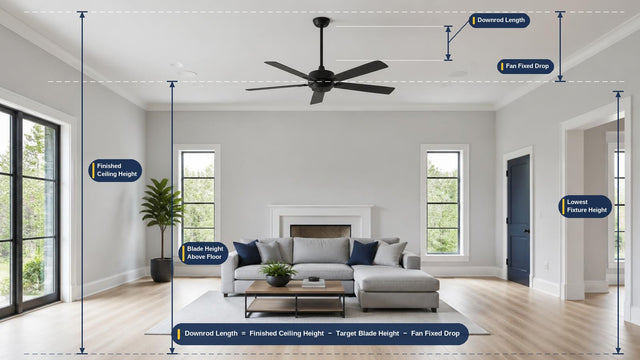
Measure the clear gap between beams, the depth of each beam, and the blade height above the floor.
Measure the clear distance between the beams from face to face. Measure how far the beam sticks below the ceiling, which is the beam depth. The blades will not hit a beam that sits above the blade tips, but a fan mounted in a dropped position may hit the beam. Use the manual's minimum blade height as the floor, usually 7 feet or more, and compare it to the blade sweep.
- Gap between beams: measure face to face.
- Beam depth: how far it hangs below the ceiling.
- Blade height: the manual minimum above the floor.

Can You Mount a Fan on an Exposed Beam?
Mount to a beam only with a bracket and fasteners designed for it, and confirm the beam can carry the weight.
Some fans mount to a beam with a bracket that screws into the wood. One Breezary manual in our product files specifies a minimum wood thickness of 35 mm for its bracket, and another asks for a mounting point that can support at least 35 pounds. Check the bracket and the weight on your own fan. A fan should never hang from a light fixture box or a loose beam without a rated bracket.
Check first: a fan-rated box or bracket is required. Have a licensed electrician or a structural professional confirm the beam can carry the fan.
Which 48-Inch Fans Suit Beamed Ceilings?
Look for a short or angled mount option and check the listed clearance before buying.
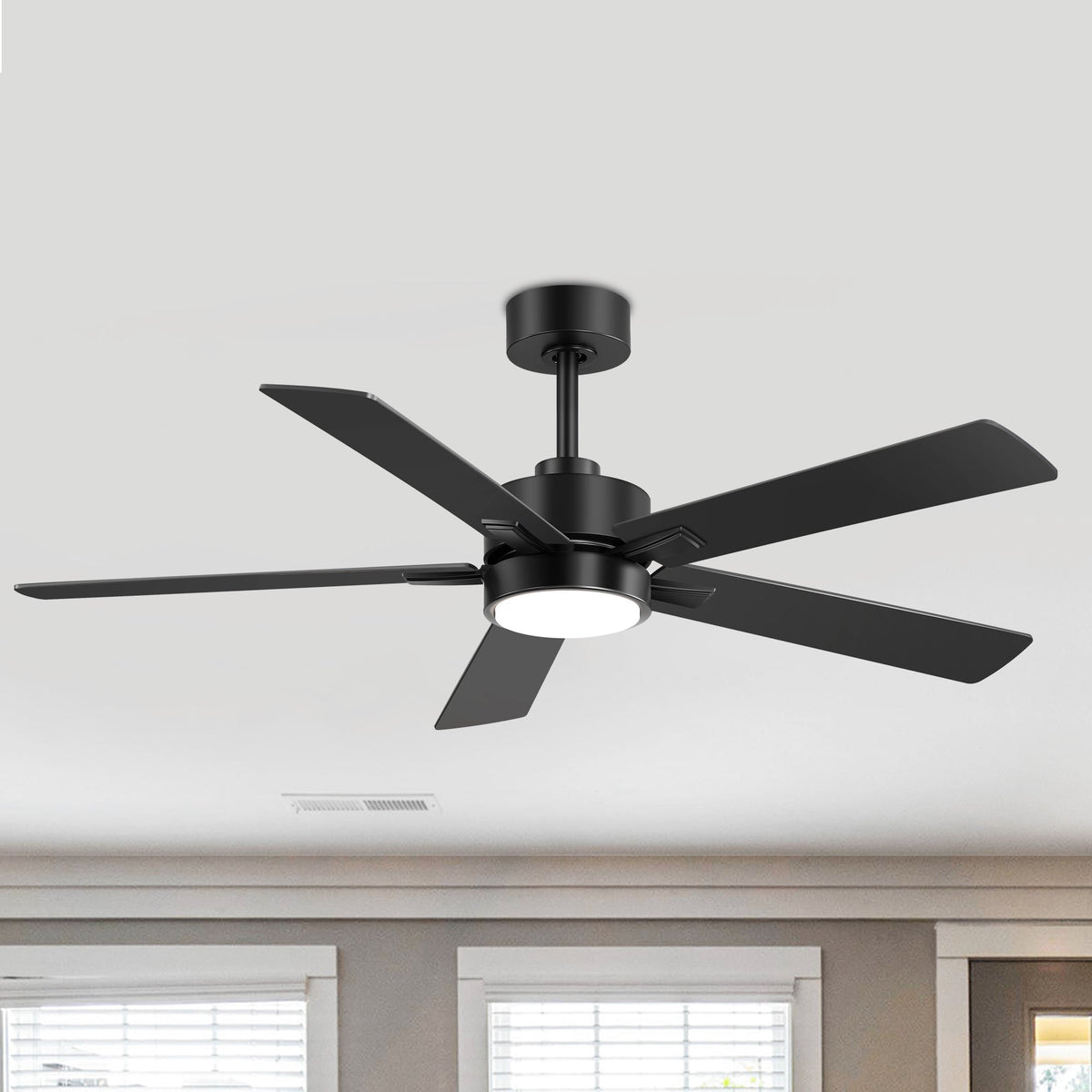
A 48-inch fan with a short downrod or a flush mount usually suits a beamed ceiling better than a long downrod. Check the mount options and the blade clearance on each model. For a 48-inch model with lights, browse the collection linked below and compare the mounting details on each product page. If a model does not list its clearance, ask customer service before buying.
How Does the Blade Path Affect the Fit?
The blades sweep a circle, so the beams must sit outside that circle or be high enough to clear it.
A 48-inch fan sweeps a circle about 48 inches across. A beam that runs through that circle can be struck by a blade, while a beam outside the circle is usually clear. Beams that sit high above the blade tips do not matter for the blade path, but they can still limit where you can mount the fan. Mark the blade circle on the ceiling before you mount anything, so you can see where the blades will travel.
If the beams are close together and the blade path crosses one, a smaller fan or a flush mount may be the better choice.
Does the Beam Material Change the Choice?
Solid wood beams, engineered beams and beams with a finish each need a suitable fastener and bracket.
A solid wood beam can hold a bracket with lag screws or wood screws of the right length. Engineered beams and beams with a hollow center need a bracket rated for that construction, so do not rely on a screw that only passes through the surface. Ask a qualified professional to confirm the beam and the fastener before drilling. The manual or the bracket instructions state the minimum wood thickness and fastener size.
Check first: never drill into a beam without confirming it is solid and that the fastener is rated for the fan weight.
Does a Beam Block the Light?
Beams can cast shadows, so plan the light placement with the fan.
A fan light placed close to a beam can cast a shadow across the room. Consider where the light falls, and add a second light source if the beam blocks the main work area.
How Many Beams Can a Fan Sit Between?
The fan needs the space between beams, not just the diameter, to sit cleanly.
Some beamed ceilings have beams every 16 or 24 inches, and a 48-inch fan will cross several of them. A fan that sits centered between two beams may still touch a beam if it is mounted too low. The space that matters is the open area around the blade circle, and the beams that sit inside that circle decide the fit. Check the spacing before ordering, and mark the layout on the ceiling.
What Are the Alternatives?
A flush mount, a smaller fan or a fan placed off the beam line can solve the problem.
If the 48-inch fan will not clear the beams, a flush mount keeps the blades higher and may clear the beams. A smaller fan may fit between the beams, though it moves less air. Another option is to place the fan off the beam line, where the blades can sweep clear of the beams. For how to choose between mount styles, see flush mount vs standard ceiling fans.
Can a 48-Inch Ceiling Fan Fit Between Exposed Ceiling Beams? FAQ
Will a 48-inch fan hit an exposed beam?
It can, if the blade sweep reaches the beam or the fan is mounted too low. Measure the beam depth and the blade height first.
Can I hang a ceiling fan from a beam?
Only with a bracket and fasteners rated for it, and with confirmation that the beam can carry the weight.
What clearance do I need above the blades?
The manual gives the minimum. Use that number, which is often about 7 feet or more above the floor.
Should I choose a flush mount for a beamed ceiling?
Often yes if the ceiling is low or the beams are deep. Check the listed mount and clearance.
Can I ask a contractor to check the beams first?
Yes. A contractor can confirm the beam depth, the spacing and the bracket options before you buy a fan.
Browse the related collections.
View 48 inch ceiling fans with lights