Key takeaways
- Measure air speed at seat height. ASHRAE 55 sets a 0.8 m/s limit for uncontrolled spaces above 25.5°C.
- Get measured noise data. The catalog lists motor and speed, not a measured dB or NC rating.
- Use the listed room size. Large and great room labels are a starting point, not an office certification.
- Confirm mounting and power. Minimum blade height, mount option and the circuit must all fit the office.
Can a Large Ceiling Fan Work in an Office?
It can, when the fan is sized for the open area, mounted at a safe height and run at a speed that keeps the air moving without making papers and conversations hard to manage.
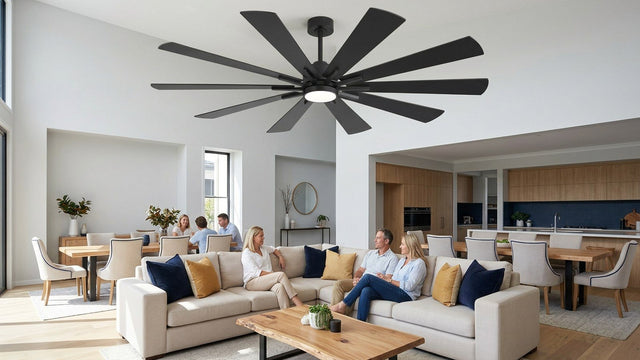
Offices are not warehouses. People sit for long periods, they talk on the phone, and they expect quiet and steady air. A large fan spreads gentle air over a wide area, so it can work well in an open-plan floor or a large meeting room. It can also be too much for a small office, or too loud for a focus room, so the room type matters as much as the diameter.
Breezary lists large fans in the large industrial ceiling fans collection, and several of them list large or great room use. The guidance below helps you check whether a listing suits an office before you order.
How Much Air Speed Is Too Much for Office Workers?
The ASHRAE 55 thermal comfort standard sets an average air speed limit of 0.8 m/s, about 160 feet per minute, for spaces where occupants cannot control the fan, once the air is warmer than 25.5°C (77.9°F).
That limit is the reference most engineers use when they talk about fan comfort. Sources that summarize the standard agree on the 0.8 m/s figure for uncontrolled spaces, but they describe the rules for spaces where people can adjust the air speed themselves differently. Check the current edition of the standard before you use a higher figure in a design or a specification.
In practice, measure the air at seat height, not at the fan. A fan can be pushing strong air at the ceiling and still deliver gentle air at a desk, and the reverse can also be true. Keep the speed setting low enough that people can work without holding down paper, and let staff adjust the speed where the fan allows it.
Check first: the catalog lists maximum RPM for most fans, but not air speed at a desk. Measure at seat height before you decide the fan suits the room.
How Quiet Does an Office Fan Need to Be?
Office noise is usually judged against a room criterion, often around NC 30 to 40, and a fan's noise has to fit that target at the speed you plan to run.
Private offices are commonly designed for lower background noise than open offices, and meeting rooms are often quieter still. Those targets come from acoustic consultants and industry guidance rather than from a single rule, so treat them as design targets. A fan can be quiet at one speed and noticeable at another, and low-frequency hum from the motor or the blades is the kind of noise that stands out in a quiet room.
Breezary's catalog lists motor type, blade count and maximum speed, and some listings use the words "silent DC" in the title. Those words are not a measured noise rating. If the noise level matters for your room, ask the manufacturer for measured sound data at the speed you plan to use, and compare it with the room target.
- Ask for measured sound data at the planned speed, not only the maximum.
- Compare the data with the room criterion, and test the fan in place before you rely on it.
- Keep fans away from focus rooms or phone booths if the room is designed for very low background noise.
Which Room Sizes Suit a Large Office Fan?
Choose a fan rated for the room size in its listing, and check the mounting height against the ceiling of the office.
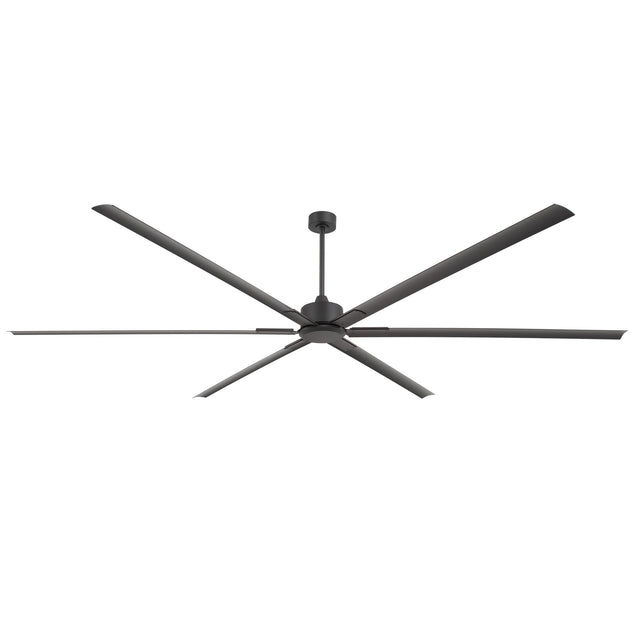
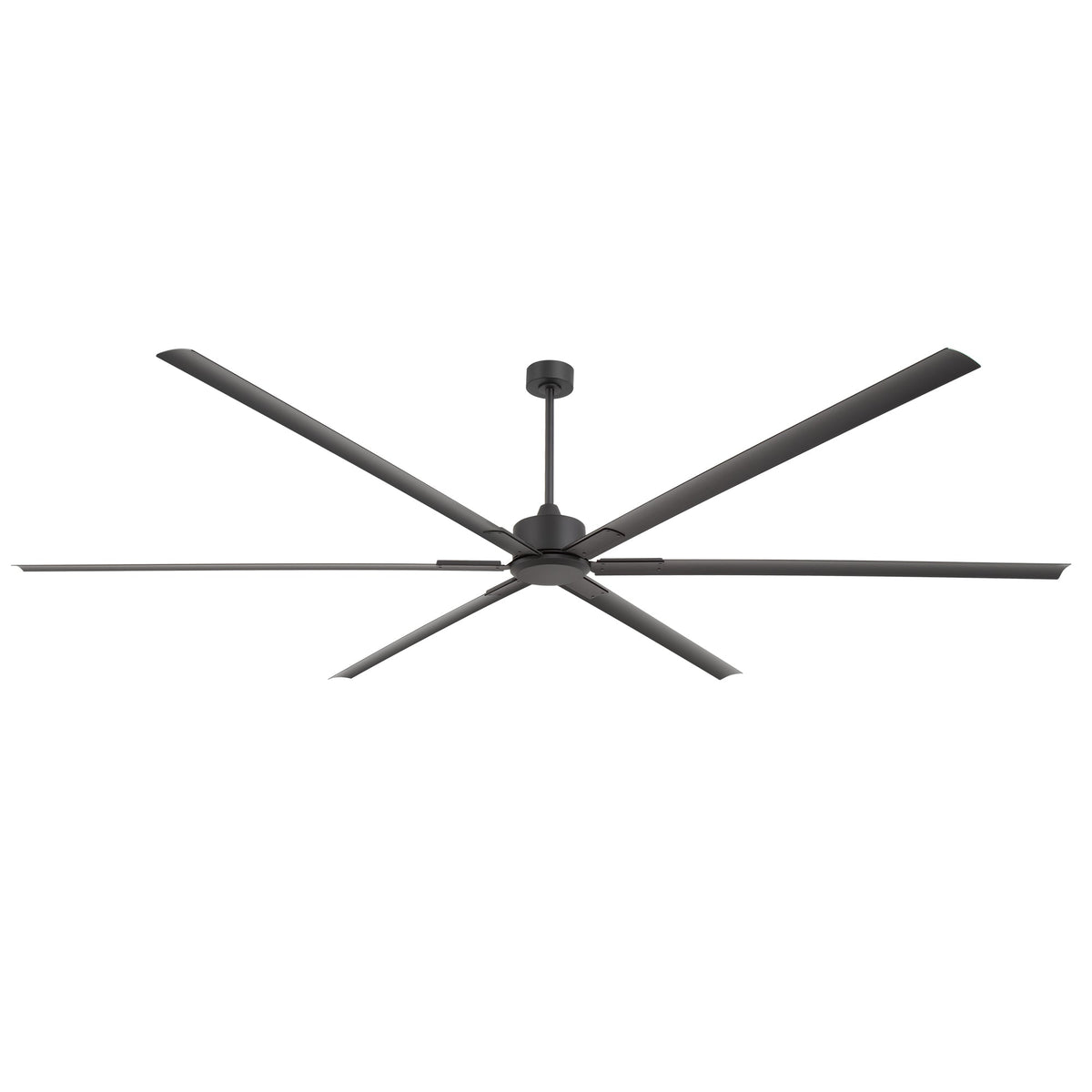
Several large listings in Breezary's collection name the room size they suit. The AeroSpan XL 96 to 108 inch fan lists large room and great room use, with indoor and covered outdoor options. The AirForge 120 inch and the Arvessa 100 inch list large and great room use. The Austerra 120 inch fan lists great room use and indoor only. Use those room labels as a starting point, then check the floor plan.
| Model (catalog title) | Listed diameter | Room size listed | Mounting | Price |
|---|---|---|---|---|
| Arvessa 100 Inch Industrial No Light Ceiling Fan With Remote | 100 inch | Large and great room | Downrod | $246.99 |
| AeroSpan XL 96–108" Large Ceiling Fan with Remote | 96, 100 or 108 inch | Large and great room | Angled or downrod | $229.99 |
| AirForge 120" HVLS Industrial Ceiling Fan | 120 inch | Large and great room | Angled or downrod | $350.99 |
| Austerra 120" Industrial Ceiling Fan Without Light & Remote | 120 inch | Great room, indoor only | Downrod | $363.35 |
Prices are catalog prices at the time of writing and can change. None of these listings states an office or commercial certification, so confirm the intended use with the manufacturer.
How High Should an Office Fan Hang?
Mount the fan high enough that the blades clear people and furniture, and low enough that the air reaches the desks. The manual gives the minimum blade height for each model.
Offices often have drop ceilings, lights and sprinkler lines, so the mounting plan is part of the choice. Confirm the minimum blade height, the mounting option and the structural support before you order. A downrod mount suits most standard ceilings, and an angled mount can help where the ceiling slopes, but only if the model lists that option.
Check the electrical supply too. Confirm the voltage and phase on the listing, and have a licensed electrician check the circuit before the fan is installed.
An Office Buying Checklist
Measure the room, the air speed and the noise, then compare two or three models that fit the room size and the mounting height.
- Room: confirm the listed room size, the floor area and the ceiling height at the planned mount.
- Air: measure the speed at seat height at the planned setting, and keep it gentle enough for paper and phone calls.
- Noise: get measured sound data from the manufacturer and compare it with the room target.
- Fit: confirm the minimum blade height, the mounting option and the electrical supply.
- Use: confirm indoor or covered outdoor use, and whether the manufacturer states any office or commercial rating.
Want to compare large fans for a large room?
View large industrial ceiling fansLarge Ceiling Fan for Office FAQ
Is a large ceiling fan good for an open office?
It can be, if the fan is sized for the open area, mounted safely and run at a gentle speed. Measure the air at seat height and check the noise with the manufacturer before you rely on it.
What is the air speed limit for an office fan?
ASHRAE 55 sets an average air speed limit of 0.8 m/s (about 160 feet per minute) for uncontrolled spaces once the air is above 25.5°C. Check the current edition of the standard for other conditions.
Are Breezary large fans rated for offices?
The listings state diameter, motor, room size and mounting, but not an office or commercial certification or measured noise. Ask the manufacturer for those details before you buy.
Can a fan be too quiet to matter?
Noise is judged against the room. A fan that is quiet in a warehouse can still be noticeable in a focus room, so test the fan at the speed you plan to run.