Key takeaways
- Start with the work zone. Pick the smallest diameter that covers the benches and the floor you use.
- Check the blade clearance first. The minimum blade height in the manual matters more than the diameter.
- Read the indoor and outdoor rating. A covered bay is not the same as a sealed shop.
- Use two smaller fans in a divided shop. They often serve the work zones better than one very large fan.
What Does a Shop or Workshop Need From a Large Fan?
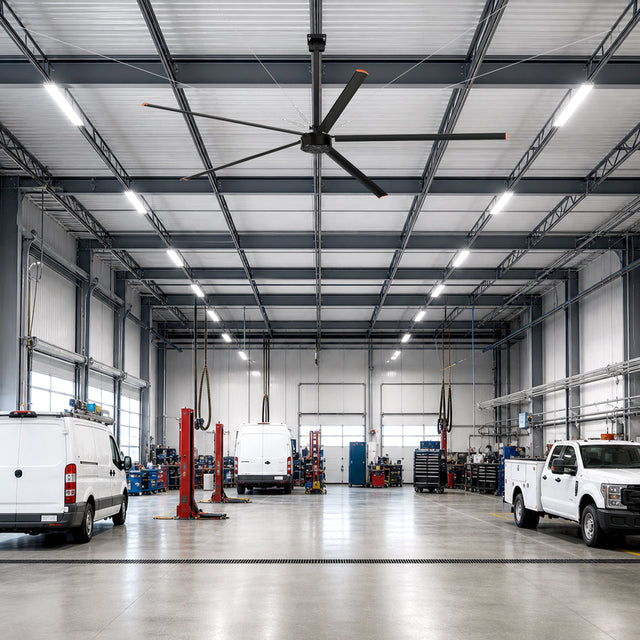
A shop fan has to move air across the work benches and the floor, not just over the middle of the room. That usually means a diameter between 96 and 120 inches, mounted high enough to clear everyone and everything underneath.
Shops, garages and workshops are different from living rooms. People stand, lift, weld, paint or assemble, and the work often happens in one or two zones rather than across the whole room. A fan that is too small leaves the bench areas stuffy. A fan that is far too large can hang over racks, lifts and vehicles where it has no clear space to spin. The useful question is not "what is the biggest fan I can fit" but "which work zones need moving air, and how big a fan can I mount above them safely."
Breezary lists several large fans for these spaces in the large industrial ceiling fans range. Most of them sit between 96 and 120 inches, and they are rated by the manufacturer for large rooms and open shops rather than for bedrooms.
What Size Fan Fits a Shop or Garage?
Start with the work zone, then pick the smallest diameter that covers it. Two or three smaller fans can serve a divided shop better than one very large fan.
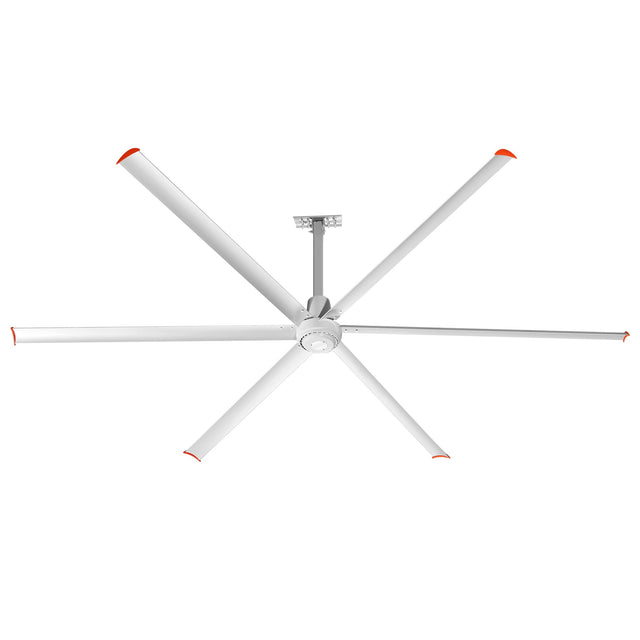
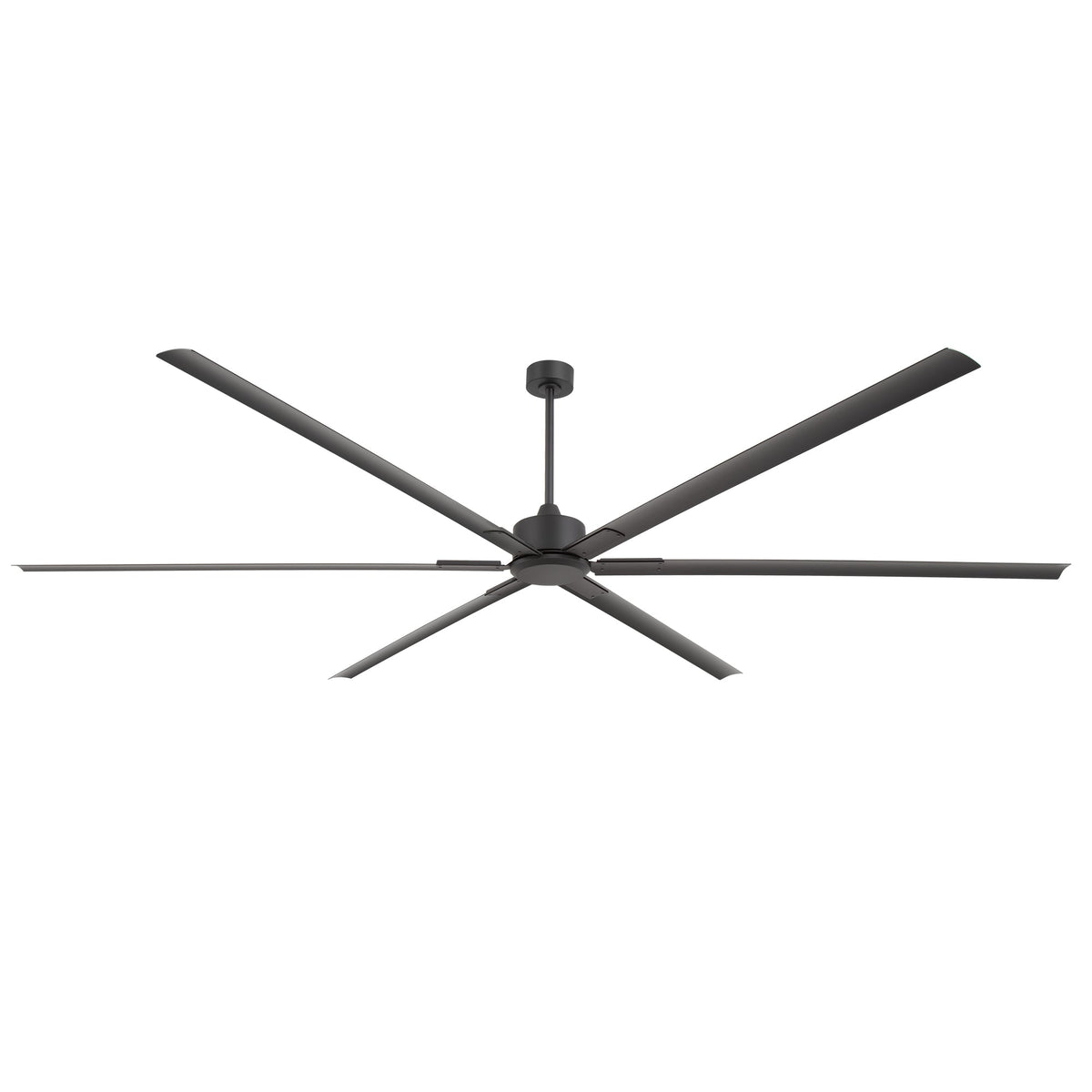
A two-car garage or a small workshop usually works with a single fan in the 96 to 108 inch range. Larger open shops with a clear floor can use a 120 inch fan, which is the largest diameter in this set of listings for the shop category. The garage and workshop fan placement guide explains how to match the fan to the floor you actually use.
| Model (catalog title) | Listed diameter | Blades | Mounting | Price |
|---|---|---|---|---|
| AeroSpan XL 96–108" Large Ceiling Fan with Remote | 96, 100 or 108 inch | 7 or 8 | Angled or downrod | $229.99 |
| Arvessa 100 Inch Industrial No Light Ceiling Fan With Remote | 100 inch | 8 | Downrod | $246.99 |
| AirForge 120" HVLS Industrial Ceiling Fan | 120 inch | 6, 7 or 8 | Angled or downrod | $350.99 |
| Austerra 120" Industrial Ceiling Fan Without Light & Remote | 120 inch | 8 | Downrod | $363.35 |
Prices are the catalog prices at the time of writing and can change, so check the product page before you buy.
How High Can a Shop Fan Hang?
The ceiling height sets the mounting plan. Measure from the floor to the lowest point of the blade plane, then subtract the clearance the model needs.
Many shops have overhead doors, cranes, lifts or tall racks, so the fan has to clear all of them. The manual gives the minimum blade height for each model, and that number matters more than the diameter. If the blades would sit too low, a shorter downrod or an angled mount may solve the problem, but only if the model lists that option. Angled mounts are common on the larger listings in this set, while the Austerra 120 inch model is listed for downrod mounting only.
Look at the fan from the floor too. A fan that spins over a lift or a rack can be a hazard even when the blades clear the ceiling. Keep the fan away from anything that can be bumped, and check that the mounting structure is rated for the fan's weight.
Check first: confirm the minimum blade height in the manual and the mounting option listed for the exact model. Do not rely on the diameter alone.
Can a Shop Fan Go in a Garage or Open Bay?
Some models list covered outdoor use, and others are rated for indoor use only. Read the listing before you put a fan in an open-sided bay.
Several of the 96 to 120 inch listings, including the AeroSpan XL and the AirForge 120, list both indoor and covered outdoor use. The Austerra 120 inch model is listed for indoor use only. A covered open bay is not the same as a sealed shop, so treat any "covered outdoor" rating as a limit on rain and weather exposure, not permission to hang the fan in the open. The outdoor ceiling fan rating guide explains what wet ratings mean in practice.
Which Controls and Motors Suit a Shop?
A remote-controlled fan with a reversible motor gives you speed and direction control without a wall switch that someone can forget.
The shop listings in this set are remote controlled, and the AirForge 120 and the Arvessa 100 use PMSM motors, while the AeroSpan XL and the Austerra 120 use DC motors. Read the motor type and the maximum RPM for the exact model. The AirForge 120 lists different maximum RPM figures for its 6, 7 and 8 blade options, so the blade count changes the speed as well as the look.
- Choose remote control so the fan can be run from the work area.
- Check whether the fan reverses, which can help in winter when the air is pulled from the floor back up.
- Confirm the motor type and blade count on the product page before ordering.
How Do You Pick the Right Shop Fan?
Measure the space, mark the work zones, then compare two or three models that fit the mounting height.
Start with the floor area you use every day, the ceiling height at the planned mount, and anything that blocks the air, such as racks, lifts and partitions. Then compare the diameters that fit. If one large fan would sit over a clear floor, a 120 inch model may be the right choice. If the shop is divided, two 96 to 108 inch fans can cover the zones better and leave the blades clear of the racks. The guide to the biggest ceiling fan you can buy shows how the sizes step up from a home room to an HVLS system.
When you are stuck between two diameters, walk the floor at the working height and ask two questions. Which bench gets the least air right now? And can a fan of that size reach it without its blades passing over a lift, a rack or a door swing? Whichever size answers both questions cleanly is usually the right one. Keep a note of the ceiling height at the planned mount, because the answer changes if the building adds a crane, a mezzanine or a taller rack later.
Ready to compare shop-sized fans?
View large industrial ceiling fansShop and Workshop Ceiling Fan FAQ
What size ceiling fan does a two-car garage need?
Many two-car garages work with a single fan in the 96 to 108 inch range, as long as the ceiling height and the blade clearance suit the model. Check the work zones and the manual before you choose.
Can a large fan go over a lift or a rack?
Only if the blades clear the lift or rack at its highest position and the manual allows the mount. Keep the fan away from anything that can be bumped, and confirm the mounting structure.
Is a 120 inch fan too big for a shop?
It depends on the ceiling height and the floor. A 120 inch fan needs a high, clear mount. In a divided shop, two smaller fans often serve the work zones better.
Can a shop fan run outdoors under a covered bay?
Some models list covered outdoor use and others are indoor only. Read the listing for the exact model, and treat a covered outdoor rating as a limit on weather exposure, not permission to install in the open.