Key takeaways
- Rain decides the rating. Damp-rated fans suit spots a solid roof keeps dry; wet-rated fans are for anywhere rain or spray can land on the fan.
- Open pergolas are wet locations. They give no rain protection, so only a wet-listed fan, box and wiring method belong there.
- IP44 is not a wet rating. It means splash protection under IEC 60529. Look for the words damp location or wet location on the label and in the manual.
- Large Breezary fans need shelter. Models listed for covered outdoor use belong under a solid roof, away from blowing rain; ask customer service if you need a documented rating.
Which Fan Rating Does Each Outdoor Space Need?
Use a damp-rated fan where a solid roof keeps rain off the fan, and a wet-rated fan anywhere rain, snow or spray can reach it. Open pergolas and uncovered decks need wet-rated fans; screened porches and deep covered patios usually need damp-rated fans at minimum.
The ratings come from US electrical code language. The 2023 National Electrical Code (NFPA 70) defines a damp location as one "protected from weather and not subject to saturation with water," with roofed open porches given as an example. A wet location includes anything "unprotected and exposed to weather." A dry location is a normal indoor room. For a short refresher on all three, see how to choose a ceiling fan with light.
| Space | Can rain reach the fan? | Minimum rating to look for |
|---|---|---|
| Screened porch with a solid roof | Not normally | Damp; wet if rain blows through the screens |
| Covered patio, fan well under the roof | Not normally | Damp |
| Covered patio, fan near the open edge | In wind-driven rain, yes | Wet |
| Gazebo with a solid roof and open sides | Depends on roof depth and wind | Damp at the center; wet if rain reaches the fan |
| Open or slatted pergola | Yes | Wet |
Humidity alone does not make a space wet. A screened porch in a humid climate is still a damp location if water cannot land on the fan. Salt air is a separate problem that no damp or wet rating measures; that is covered in coastal ceiling fans and salt-air protection.
Do You Need a Wet-Rated Fan Under a Covered Patio?
Not if the fan hangs well back from the open sides, where rain never lands. If storms push rain under the roof edge, or you hose down the patio, treat that spot as wet.
A roof does not protect every square foot below it equally. The center of a deep patio can stay dry through a storm while the outer few feet get soaked by rain blowing in sideways. Before choosing a fan, look at the ceiling after a windy rain: water marks, wet beams or puddles under the edge show you where the wet zone is.
Can a wet-rated fan be left in direct rain?
Yes. That is what a wet-location fan is built and marked for. It still needs care: follow the manual on cleaning, do not aim a pressure washer at the motor housing, and check the blade screws each season, because a loose blade causes wobble. If one starts, see how to balance a wobbling ceiling fan.
Is IP44 Wet-Rated? What Breezary Outdoor Fans Are Rated For
IP44 is not a wet-location rating. It is an IEC 60529 code meaning protection against solid objects larger than 1 mm and against splashing water. Breezary product pages do not currently state a damp- or wet-location listing for the models below, so confirm the rating before installing one where moisture can reach it.
Ceiling fans sold in the US are safety-tested to UL 507, the standard for electric fans. A damp or wet suitability marking is part of that kind of listing and appears on the fan's label and in its manual. An IP number from a different standard, or words like "waterproof" in a product name, do not replace it.
Here is what the product pages say for Breezary's outdoor-labeled fans and for several large models listed for covered outdoor use:
| Model | Listed use location | What the product page says |
|---|---|---|
| Seravo 42/52-Inch Outdoor Ceiling Fan With Light | Indoor, Covered Outdoor, Outdoor | Rated IP44; not suitable where the location exceeds IP44 protection or local electrical requirements |
| Kelon 42-Inch Outdoor Ceiling Fan With Light | Indoor, Covered Outdoor, Outdoor | Confirm the specific location rating with Breezary before rain can reach the fan; do not assume direct rain is approved |
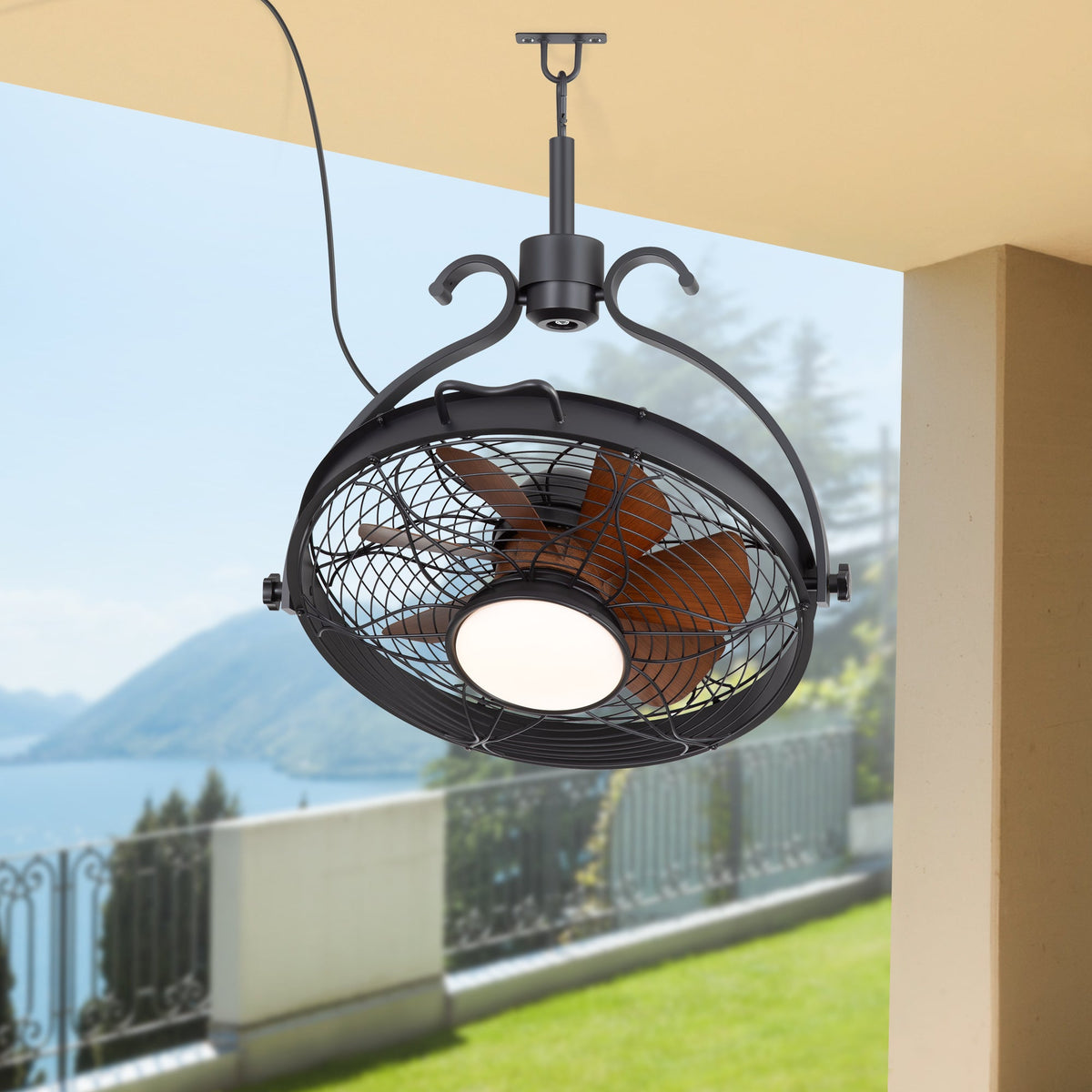
| Briaris 23.6-Inch Hanging Outdoor Ceiling Fan With Light | Covered outdoor use | Confirm location requirements for direct rain or prolonged weather exposure |
| Nelis 20-Inch Outdoor Caged Ceiling Fan With Light | Indoor, Outdoor | No IP, damp or wet rating published; keep out of direct rain |
| AeroSpan Lux 72" Large Black/White Ceiling Fan with Light & Remote | Indoor, Covered Outdoor | The manual does not confirm a damp or wet rating |
| Nerova 72-Inch Black Wood Ceiling Fan With Light & Remote | Indoor, Covered Outdoor | Protected covered locations only; not for exposed wet locations |
| Virelia 84 Inch Ceiling Fan Without Light & Remote | Indoor, Covered Outdoor | Install only in a properly sheltered location |
In practice, that means the large Breezary fans belong under a solid roof, well away from where rain or spray lands, and none of these models should be installed on an open pergola. If your space needs a documented damp or wet rating, ask Breezary customer service at 707-249-3725 or support@breezary.com before ordering.
Can You Use an Indoor Ceiling Fan Outdoors?
No, not even under a roof. An indoor fan is built and tested for dry rooms, and you cannot add a damp or wet rating afterward with sealant, covers or paint.
A location rating describes how the whole fan performed in testing: motor, wiring connections, light parts and finish together. Sealing seams by hand does not repeat that test, and it can trap moisture inside. On a porch, an indoor fan's metal parts and electronics stay damp longer than they were designed for, and the remote receiver on a DC fan is especially sensitive.
Why do outdoor fan blades sag in heat and humidity?
Wood-based blades, including plywood and MDF, can absorb moisture from humid air and warp or droop over time. Plastic (ABS) and aluminum blades do not soak up water the same way, which is why the Seravo, Kelon and Nelis use ABS blades, and the Virelia 84 and the Arvessa 100 Inch Industrial No Light Ceiling Fan With Remote use aluminum. A large fan with plywood blades, such as the Nerova 72-inch, is listed only for protected covered spaces.
Can an Outdoor Fan Handle Sun, Snow and Year-Round Weather?
A wet-rated fan is built to be exposed to weather, so it can usually stay up all year. Sun, ice and long winters still wear on finishes and parts, so check the manual for seasonal limits.
- Direct sun. Strong sun can fade painted finishes and age some plastics. Breezary does not publish UV-resistance data, so if a fan will sit in afternoon sun on an open structure, ask about it before buying.
- Snow and ice. Do not run a fan with ice or snow on the blades. Switch it off, let it clear, and inspect the blades before using it again.
- Leaving it up all year. A fan rated for its location can stay installed. Before each season, wipe off pollen and webs, check that the blades are tight, and look for rust on screws and brackets.
Can a large outdoor ceiling fan help keep mosquitoes away?
It can help a little. In a 2003 study published in the Journal of Medical Entomology, Michigan State University researchers found that wind from electric fans strongly reduced mosquito catches in carbon-dioxide-baited traps, mostly by diluting the scents mosquitoes use to find a host. The study used traps, not people, and fans blowing across the traps, so think of a patio fan as a bonus, not mosquito control.
How Should a Fan Be Mounted and Wired Outdoors?
The fan needs a fan-rated support fixed to the structure, and the box, wiring, switch or outlet must suit the same damp or wet location as the fan. On a pergola or gazebo this is a job for a licensed electrician.
Outdoor structures often lack a proper mounting point. A pergola beam may not be where the fan should hang, and an open-slatted top has no ceiling to hide a box in. Check these before you buy:
- A support rated for ceiling fans, attached to a structural member that can carry the fan's weight and motion.
- An outlet box and cover listed for the location, plus a wiring method approved for damp or wet use.
- For plug-in fans such as the Briaris, an outdoor receptacle. The National Electrical Code generally requires GFCI protection outdoors and a weatherproof in-use cover in wet locations; your electrician will confirm local rules.
- Blade clearance from posts, beams and heaters, plus the blade-to-floor minimum in the manual.
- Whether a gazebo's roof is steep enough that the fan needs an angled-ceiling mount, and what slope the manual allows.
For the wiring itself, see how to wire a ceiling fan with light.
Shopping for a covered porch or patio?
View Outdoor Ceiling FansOutdoor Ceiling Fan Rating FAQ
Can I put a ceiling fan on an uncovered pergola?
Only a fan whose label and manual list it for wet locations. An open pergola is exposed to weather, which the National Electrical Code treats as a wet location. The mounting support, box and wiring must suit that location too, so plan it with a licensed electrician.
Is a damp-rated fan enough for a screened porch?
Usually, if the porch has a solid roof and rain cannot blow through the screens onto the fan. If wind-driven rain reaches the fan position, choose a wet-rated fan instead.
Is an IP44 fan the same as a wet-rated fan?
No. IP44 is an IEC 60529 code meaning protection against small solid objects and splashing water. A wet-location rating is a separate marking from a safety listing. Read the label and manual for the words damp location or wet location.
Why do outdoor ceiling fan blades droop?
Wood-based blades such as plywood or MDF can absorb moisture in humid air, and damp wood can warp or sag. Plastic (ABS) and aluminum blades do not soak up water the same way, which is why they are common on outdoor fans.
Do ceiling fans keep mosquitoes away?
Moving air can help. A 2003 Michigan State University study found fan-generated wind sharply reduced mosquito catches in baited traps, mainly by diluting the scents mosquitoes follow. It measured traps, not bites, so treat it as a side benefit, not pest control.