Key takeaways
- The biggest Breezary fan is 24 feet. The AeroVault 20/22/24 FT series lists 240, 264 and 288 inches.
- Most shops need 60 to 120 inches. That range covers garages, workshops and open shop floors.
- Diameter is not the whole answer. Check the installed height and the blade clearance first.
- Bigger is not automatically better. Several smaller fans can serve divided spaces better than one very large fan.
What Is the Biggest Ceiling Fan You Can Buy?
The largest Breezary fan in our catalog is a 24-foot HVLS system with a listed diameter of 240 to 288 inches, depending on the model in the 20/22/24 FT series. Most people shopping for a big fan need something far smaller, usually between 60 and 120 inches.
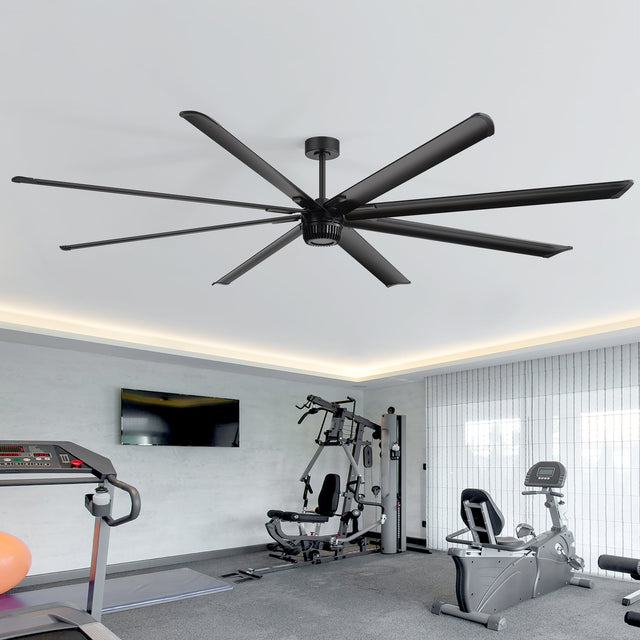
Ceiling fan sizes are easier to understand as steps. Home rooms and garages usually sit between 60 and 84 inches. Fan-only models for great rooms and open shops reach about 96 to 120 inches. Industrial and commercial fans in the large industrial ceiling fans range mostly span 60 to 120 inches, and they are built for shops, workshops and warehouses rather than living rooms.
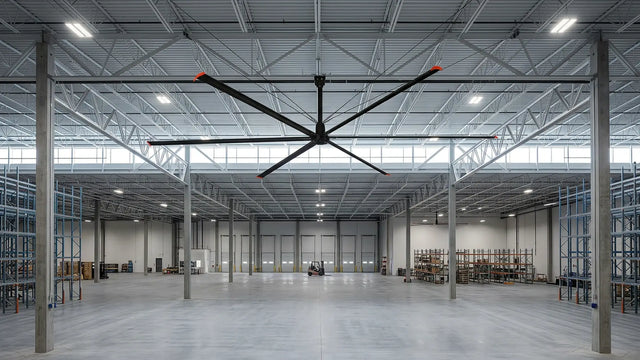
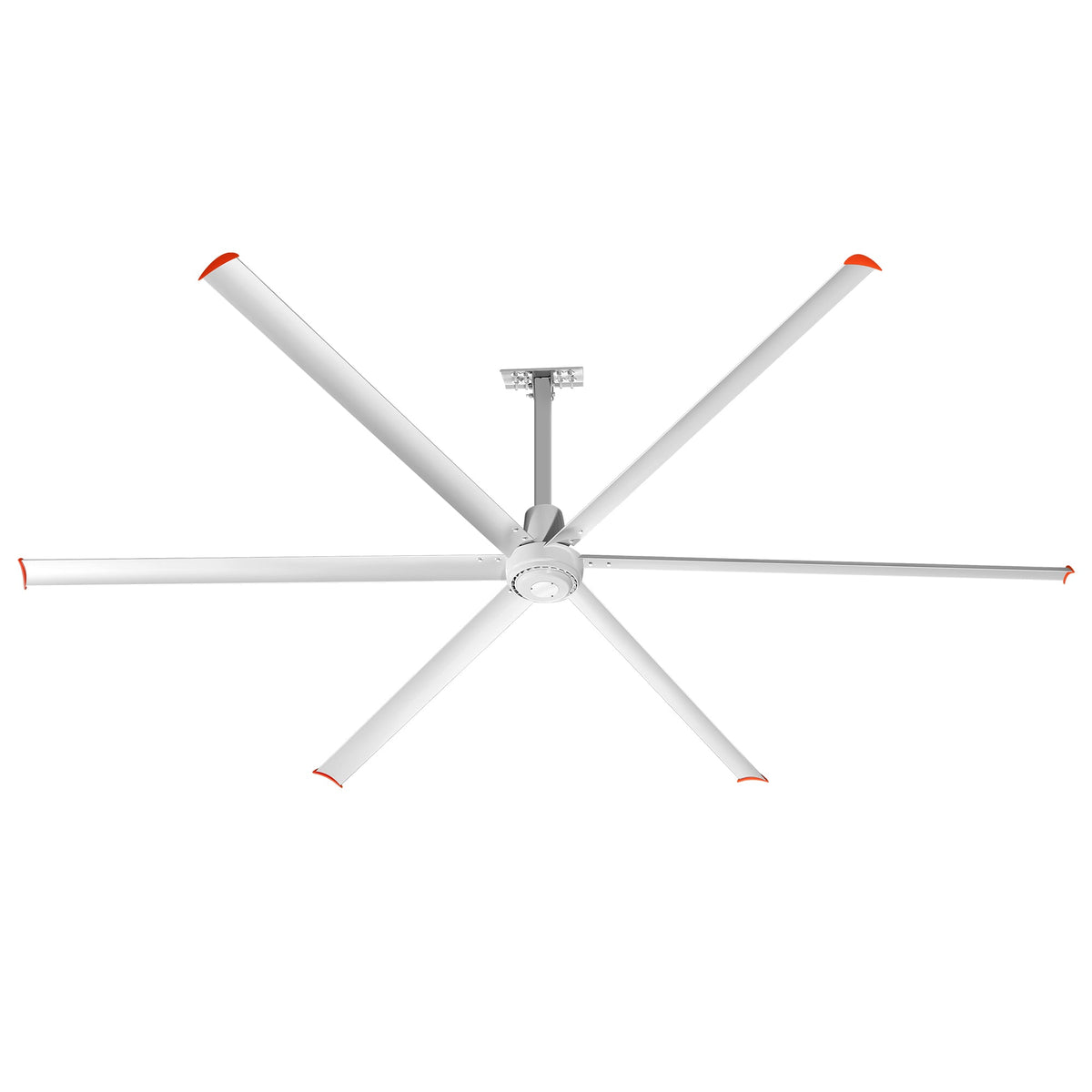
Above 120 inches the fans are HVLS systems. The AeroVault 12FT (144 Inch) HVLS Industrial Ceiling Fan is listed at 144 inches, and the AeroVault 20/22/24 FT HVLS Industrial Ceiling Fans list 240, 264 and 288 inches across the three sizes. Those are the largest fans in the catalog.
How Is Ceiling Fan Size Measured?
Fan size is the blade-tip-to-blade-tip diameter, not the length of one blade and not the height of the fan.
The diameter is the full circle the blades sweep. It does not include the motor, the hub or the mounting assembly. That matters for the biggest fans, because a 144-inch fan can hang at very different heights depending on the downrod and the mounting structure. The HVLS fan size guide shows how to measure both the diameter and the installed height.
| Model (catalog title) | Listed diameter | Typical use |
|---|---|---|
| AirForge 120" HVLS Industrial Ceiling Fan | 120 inch | Shops and large open rooms |
| AeroVault 12FT (144 Inch) HVLS Industrial Ceiling Fan | 144 inch | Great rooms over 350 sq. ft |
| AeroVault 14/16FT HVLS Industrial Ceiling Fans | 168 inch / 192 inch | Warehouses and factories |
| AeroVault 20/22/24 FT HVLS Industrial Ceiling Fans | 240, 264 and 288 inch | Hangars and very large buildings |
Check the listed diameter on the product page, and confirm the installed height with the mounting arrangement before you buy.
Which Size Fan Fits a Shop or Garage?
For most shops and garages, a fan in the 60 to 120 inch range covers the working area, and a 144-inch or larger HVLS fan is only needed for very large open floors.
Floor area alone does not decide the size. Start with the ceiling height, the clearances to racks and equipment, and the zones that need air. A taller shop with an open floor can use a larger fan. A divided shop with racks may do better with two medium fans. The large diameter vs large blade guide explains why the seven-foot line matters when you compare sizes.
Check first: confirm the manual's minimum blade height before you choose a size. A bigger diameter does not help if the blades cannot clear the floor and the racks.
Is a Bigger Ceiling Fan Always Better?
No. An oversized fan can miss the work area, clash with clearances and need more structure than the building has.
A larger fan spreads air over a wider area, but it also needs more room and a stronger mount. In a warehouse with tall racks, several smaller fans can serve separate aisles better than one very large fan. The guide to whether bigger ceiling fans work better covers the same trade-off for rooms of any size.
Where Should You Start When Choosing a Big Fan?
Start with the building, then narrow the fan size to the work zones that need air.
- Measure the usable floor and the ceiling height at the planned mounting point.
- List the zones people work in and the racks, cranes or equipment that block airflow.
- Compare the diameters in the range, then check the installed height and the power supply.
If the building is a warehouse or hangar, the guide on how many HVLS fans you need shows how to count fans for a given floor.
When a very large fan is on the list, it helps to picture the building before the catalog. Walk the floor at the height where people work and note where the air is needed most: the loading bay, the packing line, the bench row or the seating area. Then mark where the fan would sit and what lies beneath it. A diameter that looks right on paper can still be wrong once the racks, the cranes and the sprinkler lines are on the drawing.
It also helps to decide what the fan is for. Comfort on a hot shop floor, air mixing in a tall building and destratification in winter each point to different sizes and different mount heights. A fan chosen only to be the biggest one available often costs more to mount and wire than the job needs, and a smaller fan placed well can do more work than a larger fan placed in the middle of a crowded floor.
Write the answers down before you talk to a supplier, including the ceiling height, the usable floor, the work zones and the power supply. A quote built from those numbers is easier to compare than one built from the largest model on the page.
Not sure which size fits your space?
View large industrial ceiling fansHow High Should a Big Fan Hang, and What Power Does It Need?
The mounting height and the electrical supply decide whether a big fan is practical, more than the diameter does.
A large fan needs enough clear space below the blades for people, equipment and forklifts, and enough space above the blades for the mounting structure. The blade clearance is set by the model and the downrod length, so the manual is the reference for the minimum height. The ideal HVLS fan mounting height guide walks through the clearance check step by step.
Power is the second check. The 20/22/24 FT AeroVault series is listed in the catalog as a 120V single-phase model, while other models in the 14/16FT series use different configurations. Confirm the voltage, phase and circuit capacity on the product page before ordering, and have a licensed electrician check the supply for any fan larger than 120 inches.
- Measure the clear height from the floor to the lowest point of the blade plane.
- Check the downrod or angled mount options for the ceiling structure.
- Match the listed voltage and phase to the building supply.
Check first: a fan that fits the diameter but not the blade clearance is the wrong size. Confirm both before you buy.
Biggest Ceiling Fan FAQ
What is the biggest ceiling fan Breezary sells?
The AeroVault 20/22/24 FT HVLS series is the largest in the catalog, listing 240, 264 and 288 inches across its three sizes. Check the product page for the exact model you need.
Is a 12 ft fan the same as a 144-inch fan?
Yes. 144 inches is 12 feet of blade-tip-to-blade-tip diameter. The installed height depends on the mounting assembly, so measure that separately.
What size ceiling fan do most shops need?
Most shops and garages use fans in the 60 to 120 inch range. Larger HVLS fans are for very large open floors with enough ceiling height.
Can a home use a giant ceiling fan?
Most homes use fans up to about 120 inches. HVLS fans need high ceilings, clearances and structural support, so they are normally used in commercial and industrial buildings.