Key takeaways
- Color names are not materials. Dark Walnut Wood Grain appears on solid paulownia, plywood, MDF and ABS blades at Breezary.
- Read the blade material line. Collection pages and photos are browsing aids, not proof that a blade is solid wood.
- Real wood moves with moisture. Keep solid-wood blades in dry indoor rooms; a warped blade cannot be fixed with a balancing clip.
- Clean gently. Dust dry, use a barely damp cloth only when needed, and ask before using polish or refinishing.
What Are Wood-Look Ceiling Fan Blades Actually Made Of?
A blade that looks like wood can be solid wood, plywood, MDF or molded ABS plastic with a printed wood-grain face. The color name on the listing rarely tells you which; the blade material listed on the product page does.
Breezary sells all four constructions, and all four can carry the same color name. That is the main source of confusion for shoppers who want "a wood ceiling fan."
| Blade material | What it is | Breezary example | Listed blade color |
|---|---|---|---|
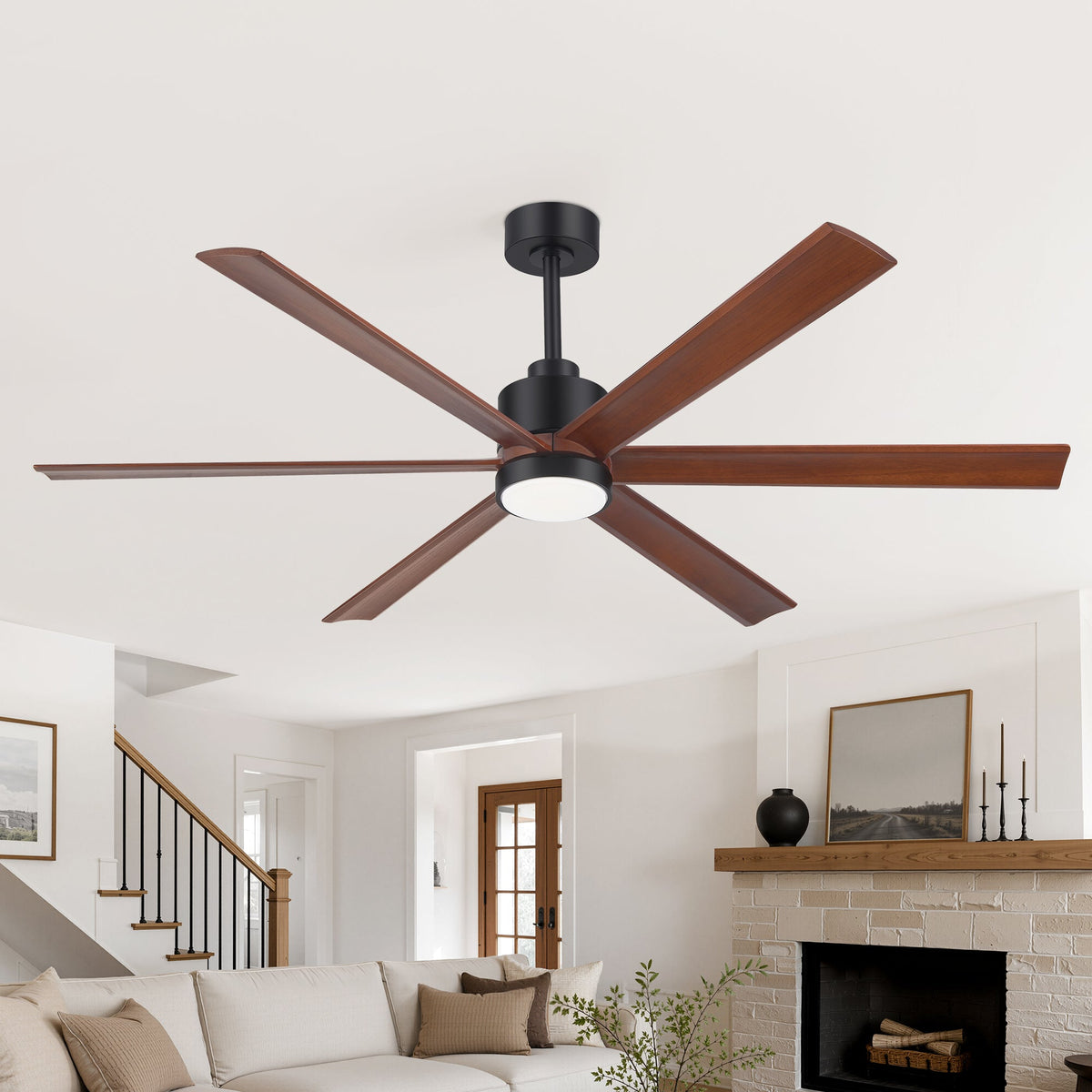
| Solid wood (paulownia) | Blades cut from real paulownia wood, then finished | Velelle 60 Inch Ceiling Fan With Light and Remote: six solid paulownia blades | Dark Walnut Wood Grain |
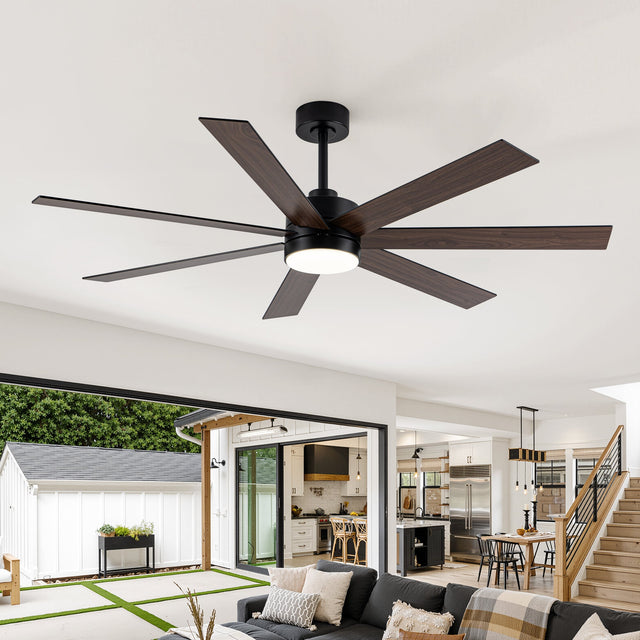
| Plywood | Thin wood layers glued together, with a finish on each face | Luminor 72-Inch Extra-Large Ceiling Fan with LED Light and Remote: eight reversible black-and-walnut plywood blades | Black, Dark Walnut Wood Grain |
| MDF | Medium-density fiberboard: wood fibers pressed into a board, then faced | Nerova 48/52" 5-Blade Ceiling Fan With Light & Remote: five dual-sided MDF blades | Black, Dark Walnut Wood Grain |
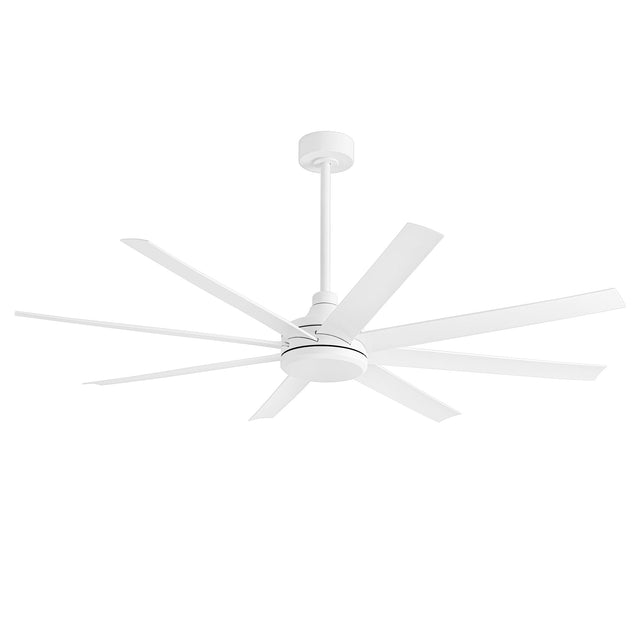
| ABS | Molded plastic with a printed wood-grain finish | Meron 56-Inch 3-Blade Ceiling Fan With No Light: three molded ABS blades | Dark Walnut Wood Grain |
None of these is a fake product. Plywood, MDF and ABS are ordinary blade materials. The point is simply to know what you are paying for, and to care for each one the right way.
Does "Walnut," "Oak" or "Koa" Mean the Blade Is That Wood Species?
Usually not. "Dark Walnut Wood Grain" is a color name. On Breezary fans it appears on solid paulownia, plywood, MDF and ABS blades alike.
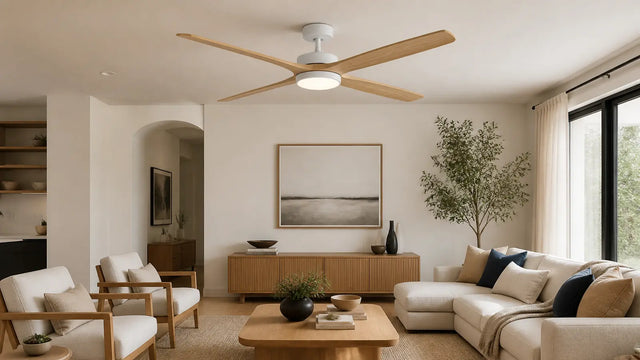
All six Breezary fans with solid-wood blades list their blade color as Dark Walnut Wood Grain. Four of them name the actual wood in the description: Velelle, Verara 52-Inch Black Ceiling Fan With Light, Sylven 72 Inch Large Ceiling Fan without Light and Sylvara 60-Inch Solid Wood Ceiling Fan with Light & Remote all use paulownia with a walnut-tone finish. So "walnut" describes the stain, not the tree.
Two more, Sylvren 60 Inch 3 Blade Wood Ceiling Fan With LED Light and Carvenor 60 Inch 3 Blade Solid Wood Ceiling Fan No Light, describe solid-wood blades in a "red walnut" finish but do not name the species. If the species matters to you, ask customer service before ordering: 707-249-3725 or support@breezary.com.
The same logic applies to oak and koa. A light-oak or koa-tone fan describes a color family. Our guide to oak ceiling fans with lights covers the oak tones themselves.
How Can You Tell if a Fan Has Real Solid-Wood Blades?
Read the blade material line and the description wording. Do not rely on the photo, the color name or which collection the fan appears in.
Collection pages group fans by look, and they can be wrong. Breezary's solid wood collection currently includes the Meron, whose own listing says it uses molded ABS blades with a wood-grain finish. Membership in a collection is a browsing aid, not proof of material.
On the product page
- Blade material reads "Solid Wood" and the description names the wood, such as paulownia.
- "Wood-grain finish," "walnut-look" or "wood-grain faces" describe a surface, and usually point to plywood, MDF or ABS.
- Black on one side, walnut on the other means at least one face is an applied finish. Reversible two-tone blades are typically plywood, MDF or ABS.
When the fan arrives
- A plywood edge shows thin stacked layers.
- An MDF edge looks like an even, fine-fiber core under the face.
- ABS feels like plastic and may show a molding seam.
- On solid wood, the grain carries around the edge and varies from blade to blade.
Treat these as clues, not a test. If material is the reason you are buying, confirm it with customer service first.
Why Is Paulownia Used for Solid-Wood Fan Blades?
Paulownia is a real hardwood that is unusually light, so a long solid blade does not add as much weight as a denser wood would.
A 1985 study in the journal Wood and Fiber Science measured an average specific gravity of 0.285 for young paulownia stem wood, lower than the other fast-growing hardwoods it was compared with. Lower density means less mass hanging from the motor and mounting bracket for the same blade size.
Breezary's paulownia fans list net weights of 10.6 lbs for the 52-inch Verara, 11.9 lbs for the 60-inch Velelle and 12.1 lbs for the 72-inch Sylven. Light wood is also soft wood, so handle the blades carefully during assembly and avoid knocking the tips against a ladder or wall.
Are Grain and Color Differences Normal on Solid-Wood Blades?
Yes. Each solid blade comes from a different piece of wood, so grain pattern and depth of color vary, even under the same stain.
Some blades will show tighter grain, some a wider figure, and some take the stain slightly darker. That variation is part of what you pay for with real wood. Printed finishes on plywood, MDF and ABS repeat much more evenly, which some people prefer.
What is not normal is structural damage: a crack, a split along the grain, a blade that does not sit flat, or finish lifting off. Photograph the blade and contact customer service. Breezary covers fan parts under a one-year limited warranty for the original purchaser.
Can Humidity Warp Wood Blades, and Can You Balance a Warped Blade?
Yes, wood moves with moisture, and no, a balancing kit cannot fix a blade that has changed shape.
The USDA Forest Products Laboratory's Wood Handbook (2021 edition) explains that wood swells as it gains moisture and shrinks as it dries, and that uneven shrinkage is a major cause of warp such as bow, twist and cup. Very dry air can also lead to small surface checks. Plywood's cross-laid layers resist this movement better than a single board. MDF can swell if water gets into it, and ABS plastic does not take up moisture the way wood does.
That is why the solid-wood listings matter here: Velelle is marked for dry indoor use only, and Verara for indoor use only. Keep solid-wood blades out of bathrooms, covered porches and other damp spots.
Hunter Fan Company's balancing guide (checked 2026) states plainly that warped blades cannot be balanced. A clip adds weight to even out small differences between blades; it cannot straighten a bent one. Our guide on how to balance a wobbling ceiling fan walks through the checks to do first. Blades leave the factory as a matched set, so if one is damaged, read whether you can replace a single blade before mixing old and new.
How Should You Clean Solid-Wood Ceiling Fan Blades?
Dust them dry with a soft cloth, use a barely damp cloth only when needed, and dry the blade right away. Skip sprays, harsh cleaners and soaking.
- Turn the fan off at the remote or wall and wait for the blades to stop.
- Support each blade with one hand while you wipe it, so you do not bend the blade bracket.
- Remove dust with a dry microfiber cloth or a clean pillowcase slipped over the blade.
- For sticky film, wipe with a cloth dampened in plain water and wrung out well, then dry immediately.
- Never spray cleaner onto the blade, and do not use solvents, abrasive pads or bleach.
Check first: Breezary listings do not give a polish or refinishing schedule for solid-wood blades. Follow the cleaning section in your manual, and ask customer service before using furniture polish, oil or wax.
Can you stain, paint or refinish the blades?
It is not something the listings cover. Sanding removes wood and new coats add material, and neither happens evenly across a set, so a refinished set may no longer balance. Printed faces on plywood, MDF and ABS should never be sanded. If you want a different look, the blade style is easier to choose at purchase; reversible two-tone blades already give you two finishes.
Want blades cut from real wood?
View Solid Wood Blade FansWood Ceiling Fan Blade FAQ
Does "Dark Walnut Wood Grain" mean the blades are walnut wood?
No. On Breezary product pages it is a color name. The same name appears on solid paulownia, plywood, MDF and ABS plastic blades, so check the blade material listed on the product page.
Are paulownia ceiling fan blades real wood?
Yes. Paulownia is a real hardwood that is unusually light for its size. Velelle, Verara, Sylven and Sylvara list solid paulownia blades with a walnut-tone finish.
Can a balancing kit fix a warped wood blade?
No. A balancing clip corrects small weight differences between blades, not a blade that has bent or twisted. A warped blade needs replacing, ideally as a matched set from the manufacturer.
Can I use furniture polish on solid-wood fan blades?
Breezary listings do not call for polish, so the safest choice is dusting and a barely damp cloth. Polish can leave a film that attracts dust. If you want to use a wood product, check the manual or ask customer service first.
Does a rustic ceiling fan need real wood blades?
No. Rustic is a look, and plywood, MDF or ABS blades with a wood-grain face can deliver it. Solid wood adds real grain variation and a natural feel, but it also needs a dry indoor room and more careful cleaning.