Key takeaways
- Farmhouse looks practical. Black or white metal, plain wood-tone blades and caged or glass lights.
- Rustic leans on nature. Visible wood, darker tones and cabin motifs such as trees and wildlife.
- Modern is about clean shapes. It can be bold or many-bladed as long as the forms stay simple.
- Tags are filters, not definitions. Reversible blades and black housings let one fan suit several styles.
What Is the Difference Between Farmhouse, Rustic and Modern Ceiling Fans?
Farmhouse fans borrow practical shapes from barns and old farm hardware, rustic fans lean on natural wood and outdoor themes, and modern fans strip everything back to clean geometry. The blades, housing and light tell you which, more reliably than color.
The three overlap, which is why so many fans seem to belong to all of them. These are the clues that separate them:
| Clue | Farmhouse | Rustic | Modern |
|---|---|---|---|
| Blades | Simple paddles, wood tone or black | Visible wood grain, warm or dark tones | Plain, slim or sculpted, often solid color |
| Housing | Black or white metal, sometimes with cage details | Dark metal, sometimes with decorative bands | Smooth cylinder or disc, no ornament |
| Light | Caged, clear or seeded glass, single bulb | Shades with nature scenes, amber or frosted glass | Flush integrated LED disc, or no light |
| Overall feel | Practical, tidy, a little nostalgic | Cabin or lodge, close to nature | Quiet, graphic, uncluttered |
Industrial often travels with all three: exposed metal, cages and matte black finishes. That shared hardware is a big reason the labels blur.
What Actually Makes a Ceiling Fan Farmhouse?
A farmhouse fan looks useful first: black or white metal, plain wood-tone blades, and a light that recalls a barn lantern or schoolhouse fixture.
The Rylis 52-Inch Farmhouse Ceiling Fan With Light & Remote is a clear example. Its listing describes black metal mixed with walnut-grain plywood "in the classic farmhouse way," finished with a caged glass shade over a single bulb.

Traditional farmhouse vs modern farmhouse
Traditional farmhouse leans on aged finishes, visible bulbs and more decorative hardware. Modern farmhouse keeps the black-and-wood contrast but simplifies everything else: a cleaner housing, crisp black against white ceilings, and often an integrated LED instead of a bulb cage. Our guide to oak ceiling fans with lights covers how black and wood tones work together.
Industrial farmhouse vs country farmhouse
Industrial farmhouse adds metal cages, exposed fasteners and matte black. Country farmhouse is softer: lighter wood, white or cream finishes, and fewer metal details.
Farmhouse vs cottage
Cottage style is the gentlest branch. Expect white or pale finishes, curved lines and floral or frosted glass rather than cages and hard edges.
What Actually Makes a Ceiling Fan Rustic?
Rustic fans emphasize natural texture and the outdoors: visible wood grain, warm or dark tones, dark metal, and motifs such as trees, mountains or wildlife.
Wood and metal together read as rustic because they echo the materials of cabins, barns and old tools: timber for warmth, iron for strength. The more texture and the darker the finishes, the further a fan moves from farmhouse toward rustic.
Traditional lodge vs modern rustic
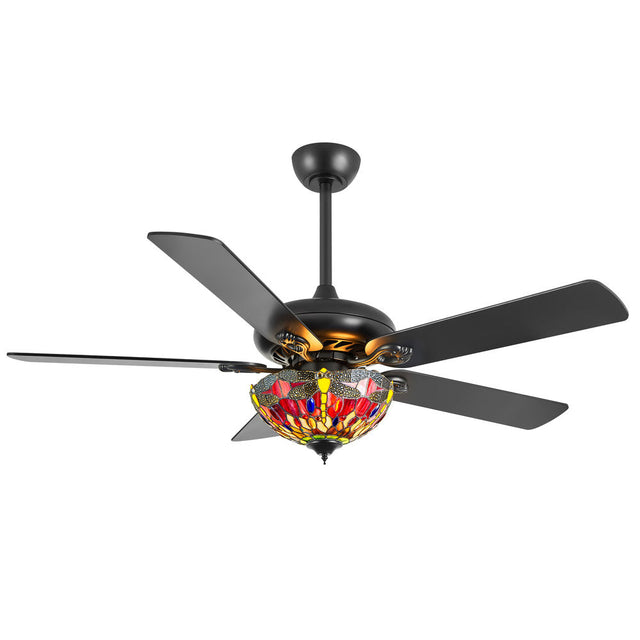
Lodge and cabin styles use pictures of the outdoors. The Cavora 52 Inch Black Ceiling Fan With Light & Remote has a light shade with forest landscapes, pine trees and wildlife, and its listing calls it cabin-inspired and suited to lodge-style rooms.

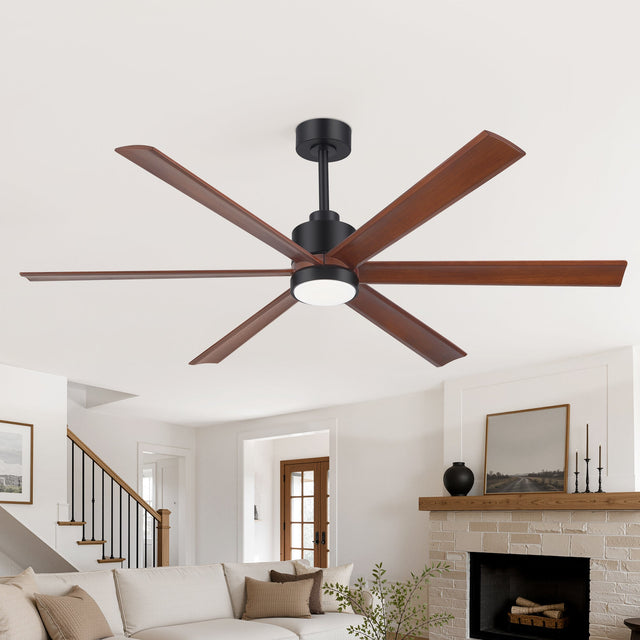
Modern rustic keeps the natural material but drops the scenery. The Sylven 72 Inch Large Ceiling Fan without Light pairs three solid paulownia blades in a walnut finish with a plain matte-black housing and no light at all. If you are weighing real wood against a wood-look finish, see solid wood vs plywood vs wood-look blades.
Cabin rustic vs western rustic
Cabin rustic draws on forests, lakes and timber. Western rustic uses ranch imagery: wrought iron, stars, leather tones and desert colors. Breezary does not currently carry western-motif fans, so a western room is better served by a plain dark fan that lets other decor carry the theme.
What Makes a Ceiling Fan Modern, and Is It the Same as Contemporary?
A modern fan uses simple geometry with little or no ornament. Strictly, modern refers to mid-20th-century design and contemporary to whatever is current, but most retailers, Breezary included, combine them as Modern & Contemporary.
Does a modern fan have to be minimalist?
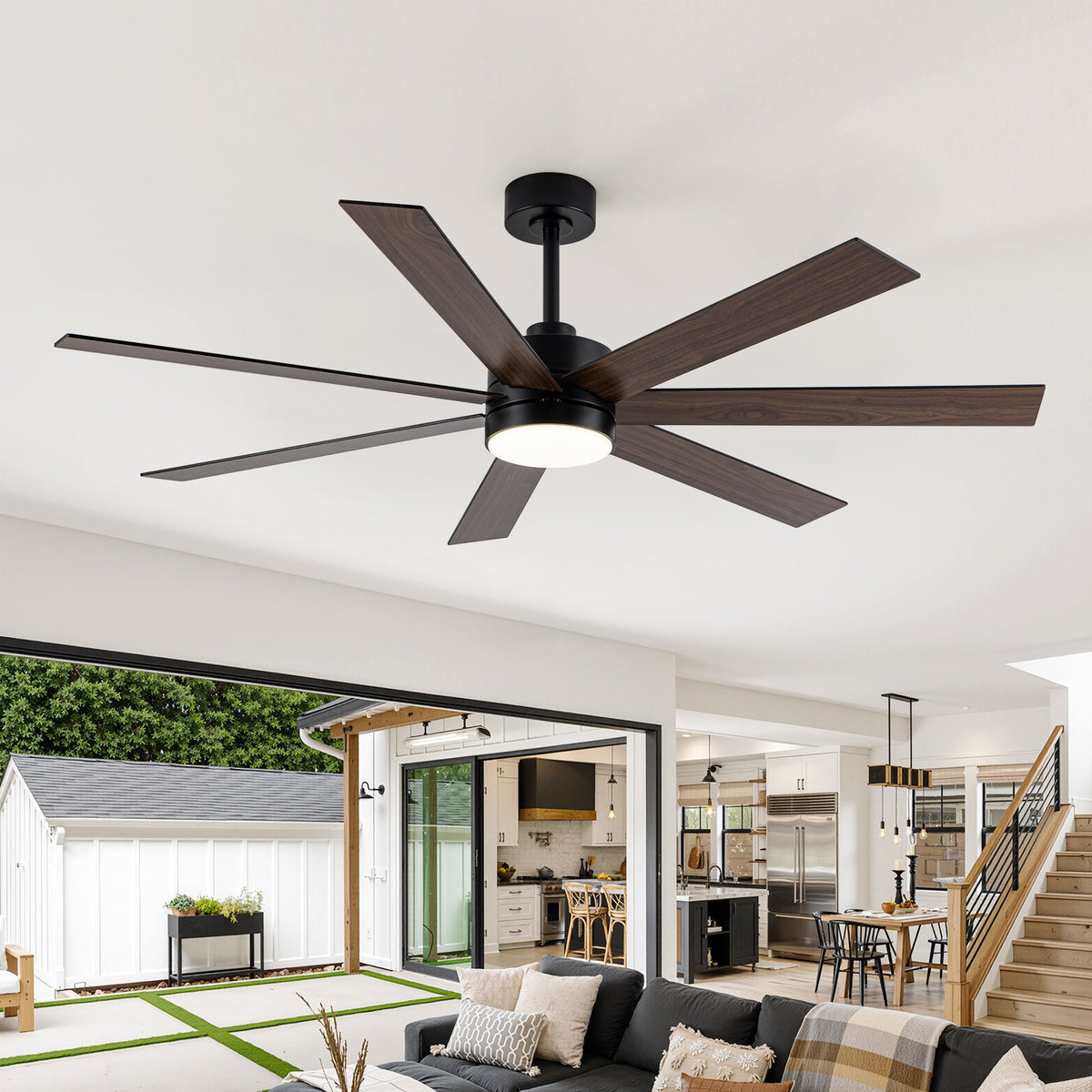
No. Modern means clean shapes, not necessarily few parts. The Aervelle 60 Inch 8 Blade Black Ceiling Fan With Light has eight blades and a broad outline, yet its only style tag is Modern & Contemporary because the housing and integrated LED are plain and graphic.
What does mid-century modern mean?
Mid-century modern refers to design from roughly the mid-1940s through the 1960s: tapered, organic curves, warm wood against dark or brass accents, and low ornament. The Koren 72-Inch Black Ceiling Fan with No Lights & Remote listing describes its three long, gently curved walnut-finish blades as a mid-century-inspired profile.
Modern is also not the same as retro. Fans that copy an older era belong to a different family, covered in vintage vs antique vs retro ceiling fans.
Why Is One Fan Tagged Farmhouse, Modern and Industrial at Once?
Style tags are shopping filters that list the rooms a fan can suit, not one definition of what it is. A neutral black housing and reversible blades let a single fan fit several looks.
The Mavora 62-Inch 7-Blade Ceiling Fan With Light shows how this works. Its listing says it reads farmhouse with the walnut grain showing and contemporary with the black faces down, and it carries Farmhouse, Modern & Contemporary, Traditional and Vintage tags. Nothing about the fan changes except which face of the blades you install downward.
Across Breezary listings, the most common combination is Industrial with Modern & Contemporary, followed by Farmhouse, Industrial and Modern & Contemporary together. There is no separate rustic tag; the rustic collections group fans by look instead.
Tags can also be broad. The cabin-themed Cavora is tagged Farmhouse, Industrial and Mid-Century Modern, while the Koren's own description calls it mid-century-inspired but its tags read Industrial, Farmhouse and Vintage. When tags and description disagree, trust the description and the photos.
How Do You Read a Fan's Style From Its Shape, Not Its Color?
Check four parts in order: blades, housing, light and finish mix. Black alone tells you little, because it is common to farmhouse, rustic, modern and industrial fans.
- Blades: plain paddles suggest farmhouse, textured wood suggests rustic, slim or sculpted solid shapes suggest modern.
- Housing: a smooth cylinder or disc is modern; cage details or decorative bands push toward farmhouse or rustic.
- Light: caged or seeded glass is farmhouse, scenic or amber shades are rustic, a flush LED disc is modern.
- Finish mix: black with walnut is the most flexible pairing. Brass, bronze or nickel shift the mood, as explained in ceiling fan finishes compared.
Settle size, ceiling height and lighting first, then style; how to choose a ceiling fan with light walks through that order.
Looking for black-and-wood farmhouse designs?
View Farmhouse Ceiling FansFarmhouse, Rustic and Modern Fan FAQ
What is the difference between a farmhouse and a rustic ceiling fan?
Farmhouse fans look practical and tidy: black or white metal, simple wood-tone blades and caged or glass lights. Rustic fans push further toward nature, with more visible wood texture, darker tones and outdoor motifs such as trees or wildlife.
Is modern the same as contemporary for ceiling fans?
Not strictly. Modern points to the clean, unornamented design of the mid-20th century, while contemporary means whatever is current. Breezary, like many retailers, groups them under one Modern & Contemporary tag.
What makes a ceiling fan mid-century modern?
Long, gently tapered or curved blades, warm wood tones against a dark or brass center, and a simple, low-ornament housing. The Koren listing describes its three curved walnut-finish blades as a mid-century-inspired profile.
Why is one fan listed as farmhouse, modern and industrial?
Style tags are shopping filters for the rooms a fan can suit, not a single definition. Reversible blades, a neutral black housing and a simple light let one fan fit several looks.
Does a black ceiling fan count as modern or farmhouse?
Either. Black is common to modern, farmhouse and industrial fans, so the color alone does not settle the style. Look at the blade shape, the housing and the light instead.