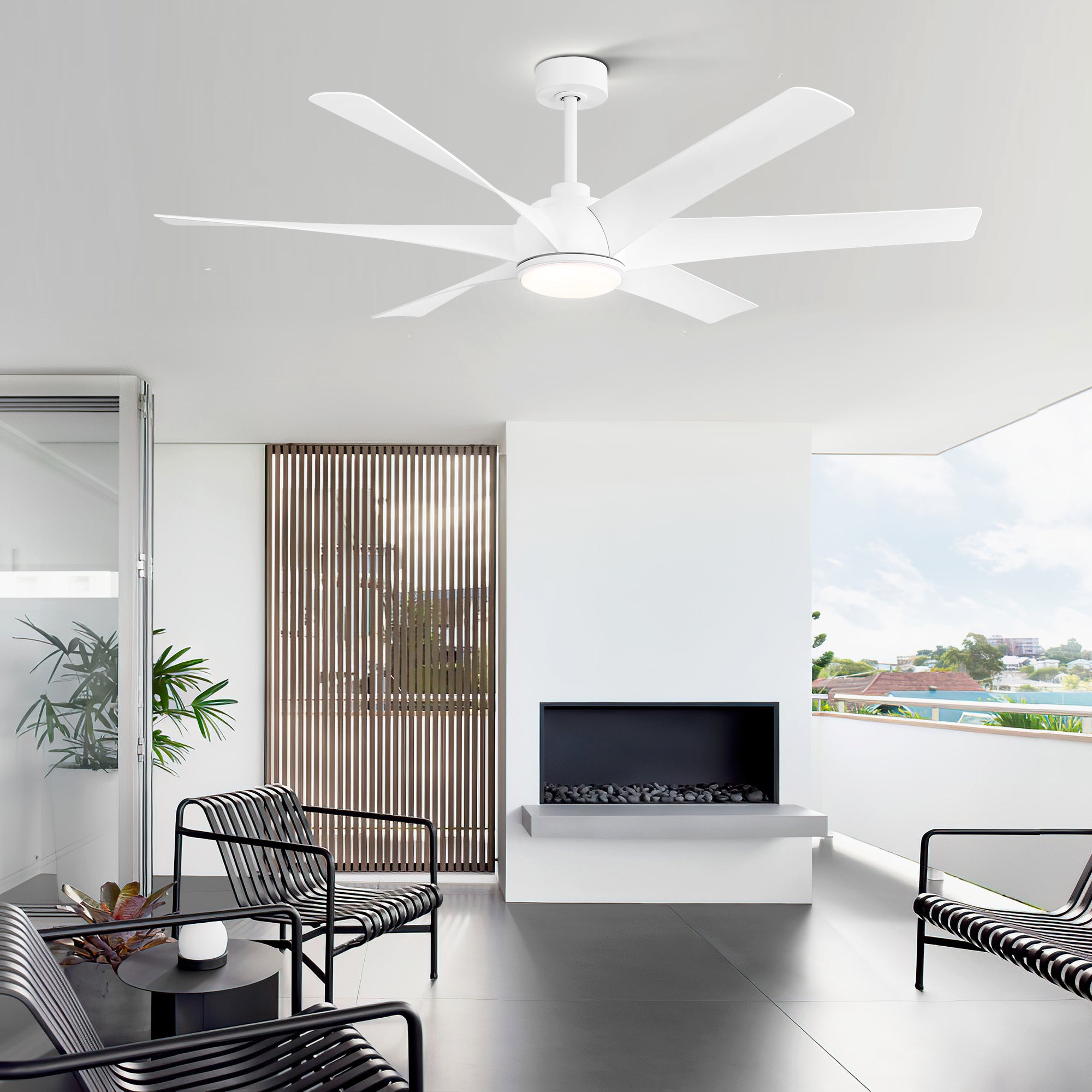

What Is an HVLS Fan?

What Does HVLS Mean?
HVLS means High Volume, Low Speed. The term describes a fan designed to move a large volume of air while rotating at a relatively low speed. In practical terms, a high volume low speed fan is engineered for broad and consistent air circulation rather than a narrow stream of fast-moving air.
Size Alone Does Not Explain the HVLS Meaning
“High Volume” does not simply mean that the fan looks large, and “Low Speed” does not mean that it moves only a small amount of air. The defining concept is the combination of large air volume , relatively low rotational speed and broad coverage .
What Is an HVLS Fan?
An HVLS fan is generally a large diameter ceiling fan designed to circulate a high volume of air at a relatively low rotational speed. It is normally installed above large, open areas where smaller fans would provide limited or highly localized coverage.
When users ask what is an HVLS ceiling fan , they are usually referring to an overhead air-circulation system engineered for warehouses, factories, distribution centers, gyms, agricultural buildings and other high-ceiling environments.
Unlike a standard residential fan, an industrial ceiling fan or commercial ceiling fan in the HVLS category is designed as a complete system that combines the blades, hub, HVLS fan motor , controller, mounting hardware and safety components.
Large Blade Diameter
Long blades help move a wider column of air through a large interior space.
Controlled Low Speed
The fan operates at a relatively low rotational speed while maintaining broad airflow.
Broad Air Coverage
Air is distributed over a wider floor area instead of being directed toward one small zone.
Overhead Installation
Most systems are mounted above open commercial, industrial or agricultural areas.
Purpose-Built Motor
The motor and controller are selected to support controlled, large-scale operation.
Large-Space Application
Common applications include a warehouse ceiling fan or a fan for other open high-ceiling buildings.
A Large Ceiling Fan Is Not Automatically an HVLS Fan
Blade diameter is important, but it does not provide a complete definition. A genuine high volume low speed fan should be evaluated by its complete operating design and verified performance.
What Are the Main Parts of an HVLS Fan?
An HVLS system is more than a residential ceiling fan with longer blades. A complete high volume low speed fan combines an engineered motor, hub, airfoils, controller, mounting hardware and safety components to support controlled operation in large commercial and industrial spaces.

Six Components That Work as One System
These components work together to create controlled large space air circulation . Their dimensions, materials and configuration vary according to the fan model, building structure and required operating conditions.
Motor
The HVLS fan motor supplies the driving force. Common systems use direct-drive or gear-driven configurations.
Airfoils or Blades
Long airfoil-style blades move a wide volume of air and help a large diameter ceiling fan create broad coverage.
Hub
The central hub connects the motor assembly to the blades and distributes rotational force to each airfoil.
Motor Controller
The controller manages speed, startup, shutdown and available operating modes according to the fan design.
Mounting System
The mounting system attaches the fan to the building structure and maintains the required height and clearance.
Safety Components
Depending on the product, these may include a safety cable, retaining hardware, overload protection or related safeguards.
Component Design Varies by Fan and Building
This overview is intended for component recognition rather than installation or repair. Always use the manufacturer’s model-specific documentation when reviewing structural mounting, controller connections, safety requirements or an HVLS fan wiring diagram .
What Type of Motor Does an HVLS Fan Use?
An HVLS fan motor may use a direct-drive or gear-driven arrangement. Both designs can support a commercial or industrial ceiling fan , but their construction, maintenance considerations and operating characteristics are different.
| Feature | Direct Drive | Gear Driven |
|---|---|---|
| Power transfer | Motor directly drives the fan assembly | Uses a gearbox to transfer power |
| Transmission parts | Generally fewer | Generally more |
| Maintenance considerations | Depends on motor, bearing and controller design | Gearbox condition and lubrication may require attention |
| Noise | Depends on the complete motor and fan system | Depends on gearbox design and installation |
| Best choice | Based on tested performance and the actual application | Based on tested performance and the actual application |
Select the Motor by Performance, Not by Name Alone
Neither motor type should be selected from the label alone. Compare tested airflow performance, operating noise, controls, maintenance requirements, installation conditions and the complete HVLS fan specification before choosing a drive system.
What Specifications Define an HVLS Fan?
A complete HVLS fan specification should explain more than blade diameter. It should help you evaluate airflow, rotational speed, motor design, electrical requirements, mounting conditions, controls and the environment in which the fan is expected to operate.
When comparing HVLS fan technical data , review how the specifications work together rather than selecting a fan from one headline number.
Physical Size
Diameter and product weight affect space planning, structural review and mounting, but size alone does not establish HVLS performance.
Operating Performance
Rotational speed, airflow and usable coverage indicate how the fan is expected to move air through the building.
Motor and Controls
The HVLS fan motor , controller and supply requirements affect operation, installation and ongoing maintenance.
Site Compatibility
Mounting height, clearances, electrical supply and environmental ratings determine whether the fan suits the actual building.
| Specification | Why It Matters |
|---|---|
| Fan diameter | Indicates total blade span, but does not determine airflow performance or coverage by itself. |
| Rotational speed | Shows the operating speed, commonly expressed in revolutions per minute, or RPM. |
| Airflow performance | Indicates how much air the fan can move under defined testing and operating conditions. |
| Coverage area | Helps estimate the usable floor area served by the fan, subject to ceiling height, layout and obstructions. |
| Rated power | Shows the stated electrical input requirements for the fan and drive system. |
| Motor type | Affects drive structure, controller design, operating characteristics and maintenance considerations. |
| Mounting height | Helps determine whether the fan can be positioned correctly in the available ceiling environment. |
| Minimum clearance | Helps prevent conflicts with walls, roof beams, lighting, sprinklers, equipment and other obstructions. |
| Noise level | Important for retail stores, hospitality areas, gyms and other occupied commercial spaces. |
| Supply voltage | Must match the electrical supply and installation requirements of the building. |
| Control method | May include a wall controller, remote control, centralized control or compatible building-system integration. |
| Environmental rating | Indicates whether the product is intended for indoor, damp or other defined environmental conditions. |
| Product weight | Affects structural review, mounting hardware, lifting equipment and installation planning. |
| Warranty and service | Important for long-term commercial operation, service access, replacement parts and maintenance planning. |
Diameter Is Important, but It Is Not the Complete Definition
There is no single specification that defines every HVLS fan. Diameter, rotational speed, airflow, motor design, mounting conditions and tested performance should be evaluated together. A large diameter ceiling fan should not automatically be classified as an HVLS system solely because it exceeds a particular blade span.
HVLS Fan vs. Traditional Ceiling Fan
The main difference is not simply size. An HVLS fan is engineered for broad air circulation in large spaces, while a traditional ceiling fan is designed primarily to create localized comfort in residential rooms.
| Feature | HVLS Fan | Traditional Ceiling Fan |
|---|---|---|
| Primary use | Large commercial, industrial or agricultural spaces | Residential rooms and smaller occupied spaces |
| Typical coverage | Broad, whole-space or wide-area circulation | Localized airflow within one room or zone |
| Blade span | Usually much larger and designed for open high-ceiling spaces | Generally smaller and sized for residential rooms |
| Operating approach | High air volume at a relatively low rotational speed | Local room airflow at a higher relative operating speed |
| Ceiling environment | High, open or large-span commercial and industrial ceilings | Standard residential or patio ceiling heights |
| Installation | Typically requires structural review, site planning and professional installation | Usually follows standard residential ceiling-fan installation |
| Electrical system | May require commercial electrical planning and a dedicated controller | Usually connects to standard residential electrical supply |
| Common spaces | Warehouses, factories, distribution centers, gyms and barns | Bedrooms, living rooms, kitchens and covered patios |
Large Residential Fans and HVLS Fans Serve Different Needs
A large residential high ceiling fan may be suitable for a great room, tall living room or covered patio without being an industrial HVLS system. Choose the category that matches the building, mounting height, airflow goal and electrical requirements rather than relying on blade size alone.
HVLS Fan vs. High-Speed Industrial Fan
An HVLS fan is designed to create broad overhead circulation across a large floor area. A high-speed industrial fan normally produces stronger, more concentrated airflow toward a workstation, production zone or other defined area.
The better choice depends on whether you need large space air circulation or focused directional airflow.
| HVLS Fan | High-Speed Industrial Fan |
|---|---|
| Broad overhead circulation | Concentrated directional airflow |
| Relatively low rotational speed | Higher rotational speed |
| Covers a wide floor area | Targets a specific workstation or zone |
| Usually ceiling-mounted | Often floor-, wall- or pedestal-mounted |
| Designed for whole-space movement | Designed for localized airflow |
| Requires ceiling and structural planning | Usually easier to relocate, reposition or redirect |
You Need Broad Overhead Circulation
You Need Focused Directional Airflow
Is an HVLS Standing Fan the Same as an HVLS Ceiling Fan?
Not necessarily. An HVLS ceiling fan is installed overhead and designed to circulate air across a broad floor area. A product described as an HVLS standing fan is normally floor-mounted or mobile and may create more directional airflow.
Ceiling-Mounted HVLS Fan
Installed above the occupied area to create wide overhead circulation without using valuable floor space.
Standing or Mobile Industrial Fan
Positioned at floor level and aimed toward a particular workstation, production line or occupied zone.
Do Not Judge the Fan from the Product Name Alone
“HVLS standing fan” may be used as a commercial product name, but that does not confirm that the product follows the same airflow, size or performance definition as a ceiling-mounted HVLS system. Review the actual HVLS fan specification and tested operating data before comparing products.
Check These Six Factors Before You Compare
Airflow
Review how much air the fan moves under defined test conditions.
Operating Speed
Compare rotational speed together with airflow and blade design.
Coverage Area
Determine whether the fan covers a wide floor area or one zone.
Air Direction
Check whether airflow is broad and vertical or focused horizontally.
Tested Data
Prefer clear performance data over unsupported marketing labels.
Intended Application
Match the fan to the building, work area and required mobility.
Compare the Mounting Style and Airflow Goal
Choose an overhead fan for wide-area circulation or a standing fan when mobility and directional airflow matter more. Product names should support the comparison, not replace tested technical data.
Where Are HVLS Fans Used?
HVLS fans are most commonly used in large, open buildings where broad and consistent airflow is more useful than a narrow stream directed at one workstation. Their ceiling-mounted design supports large space air circulation while keeping floor areas and working aisles clear.
The appropriate fan size, mounting height, airflow performance and environmental rating still depend on the building, its obstructions and the intended application.
Match the Fan to the Building, Not Just the Industry
Two buildings in the same industry may still require different fan diameters, mounting heights, motor systems and controls. Review the complete HVLS fan specification together with ceiling structure, obstructions and required coverage.
Can an HVLS Fan Be Used in a Home?
Most true HVLS fans are designed for warehouses, factories, gyms and other large high-ceiling spaces rather than standard residential rooms. If you are researching an HVLS fan for home use, first determine whether you actually need an industrial system or simply a properly sized large residential ceiling fan.
A residential home can have a large or high ceiling without requiring the same mounting system, electrical supply and coverage provided by a commercial HVLS fan.
Why a True HVLS Fan Usually Does Not Fit a Standard Home
A commercial or industrial HVLS fan can exceed the practical needs and installation limits of a normal bedroom, living room or residential dining area.
Residential Spaces That May Need a Large Ceiling Fan
Some homes contain unusually large or tall areas, but a residential high ceiling fan is often a more appropriate solution than a commercial HVLS system.
A Large Residential Ceiling Fan Is Not Automatically an HVLS Fan
A large residential ceiling fan may be more appropriate for a home than a commercial or industrial HVLS fan. The right choice should match the room dimensions, ceiling height, installation structure and required airflow rather than relying on the residential HVLS fan label alone.
For most homes, a properly selected residential large diameter ceiling fan can provide the desired visual scale and room-level airflow without requiring an industrial drive and mounting system.
Find a Large Ceiling Fan for Your Home
Compare residential fans by room size, ceiling height, mounting environment and indoor or outdoor use.
What Sizes Do HVLS Fans Come In?
HVLS fan sizes vary according to the manufacturer, drive system and intended application. Smaller designs may suit constrained commercial spaces, while a large HVLS fan may be designed for warehouses, production buildings or other open-span facilities.
Size descriptions are relative. The correct fan cannot be selected from diameter alone because the usable coverage also depends on mounting height, airflow performance, room geometry and obstructions.
| Relative Size | Common Positioning |
|---|---|
| Smaller HVLS designs | Smaller commercial facilities, constrained spaces and buildings where the largest warehouse-scale equipment would not fit. |
| Medium HVLS designs | Workshops, gyms, commercial halls and medium-sized industrial buildings with suitable ceiling height. |
| Large HVLS designs | Warehouses, manufacturing facilities, distribution centers and large logistics buildings. |
| Extra-large designs | Very large industrial buildings, aircraft hangars and other open-span environments requiring broad overhead circulation. |
What Size HVLS Fan Do I Need?
Start with the usable floor area and ceiling environment, then compare fan diameter, tested airflow, mounting height and required clearances. A larger blade span does not automatically produce the best result in every building.
For complex industrial spaces, fan placement and spacing should be reviewed as part of the complete HVLS fan specification , not treated as a simple room-size lookup.
Ceiling Height
Influences mounting position and the distance airflow must travel.
Fan Diameter
Indicates blade span but must be evaluated with airflow and speed.
Room Geometry
Long, narrow or irregular spaces may need a different layout.
Racks and Equipment
Tall shelving and machinery can interrupt the airflow path.
Beams and Fixtures
Structural beams, lights and sprinklers affect clearance planning.
Operating Speed
Rotational speed works with blade design to shape airflow.
Installation Height
The installed fan height affects airflow delivery and clearance.
Fan-to-Fan Spacing
Multiple fans must be positioned to support balanced coverage.
Avoid Fixed Coverage Claims Based on Diameter Alone
The same fan diameter can perform differently in two buildings. Coverage estimates should be reviewed together with tested airflow, mounting conditions, building layout and the intended occupied area.
What Is a Small HVLS Fan?
A small HVLS fan generally refers to a lower-diameter fan designed for commercial spaces that do not require the largest warehouse-scale equipment. However, the word “small” is relative within the HVLS category.
A smaller model must still demonstrate the operating characteristics of a high volume low speed fan . Diameter alone does not determine whether the product is genuinely part of the HVLS category.
A Small HVLS Fan Is Not Just Any Large Ceiling Fan
The term should not automatically be applied to every large, slow-moving or commercially marketed ceiling fan.
What Should Define a Smaller HVLS Design?
Buyers should review the complete system and its tested performance, not only the advertised diameter or product name.
Smaller Does Not Mean Residential
A smaller HVLS design may be intended for a workshop, compact gym, commercial hall or other high-ceiling space. It should not be confused with a normal residential high ceiling fan simply because both products are smaller than warehouse-scale equipment.
What Are the Benefits of an HVLS Fan?
The primary value of an HVLS fan is its ability to create broad and relatively consistent airflow across a large open area. The actual result depends on fan selection, installation, building layout and operating conditions.
An HVLS Fan Moves Air; It Does Not Refrigerate the Room
A fan moves and mixes air. It does not lower indoor air temperature in the same way as air conditioning. Performance claims involving fixed energy savings, fixed temperature reductions, improved air quality or complete HVAC replacement should be supported by application-specific testing and operating data.
When Is an HVLS Fan Not the Right Choice?
A high volume low speed fan is most useful when the building size, ceiling height, layout and airflow requirements support broad overhead circulation. It may not be the best solution when the space is too small, the structure cannot support installation or only one localized area needs strong airflow.
Understanding these limitations is as important as understanding how an HVLS fan works . A large fan should solve the airflow problem without creating new structural, electrical or clearance conflicts.
Standard Low-Ceiling Rooms
A normal residential room may not provide the height, blade clearance or structural conditions required by a true HVLS system. A residential high ceiling fan may be more appropriate.
Very Small Spaces
A compact room may not need the coverage, installation planning or airflow volume associated with a commercial large diameter ceiling fan .
Unsuitable Ceiling Structure
Installation should not proceed when the building structure cannot support the fan weight, operating loads and required mounting hardware.
Insufficient Safety Clearance
The fan may be unsuitable when blades cannot maintain the required distance from walls, beams, lights, sprinklers, doors, equipment or other fans.
Localized Airflow Is the Real Goal
When only one workstation needs strong directional airflow, a movable industrial fan or HVLS standing fan alternative may be easier to aim and reposition.
Electrical Supply Does Not Match
Voltage, frequency, phase, controller and protection requirements must match the site. A generic HVLS fan wiring diagram should not replace model-specific electrical documentation.
Environment Exceeds the Rating
The product should not be installed where moisture, dust, humidity, temperature or other industrial exposure exceeds its stated environmental rating.
Layout Severely Blocks Airflow
Dense racks, walls, machinery or enclosed zones may prevent broad airflow from reaching the intended occupied areas.
Professional Installation Is Unavailable
A large ceiling-mounted system should not be treated as a simple plug-in appliance when structural review, electrical work and commissioning cannot be completed properly.
Use an HVLS Fan Where Broad Overhead Circulation Makes Sense
An HVLS fan is most useful when the building size, ceiling height, layout and airflow requirements support broad overhead circulation. When these conditions are absent, a smaller ceiling fan, wall fan, standing fan or other localized airflow solution may be more suitable.
How Much Does an HVLS Fan Cost?
The HVLS fan price cannot be determined from blade diameter alone. The equipment, controller, structural mounting, electrical work, installation height and project conditions all influence the final cost.
Buyers should compare the total installed cost rather than looking only at the fan unit price.
What Changes the Final HVLS Fan Cost?
The quotation should reflect the complete product configuration and the actual site rather than a generic headline price.
Compare the Complete Installed Project
Two fans with similar diameters may have different motors, controllers, tested performance, installation requirements and service support. Compare the total project scope before making a price decision.
How to Choose an HVLS Fan
Choosing an HVLS fan requires more than selecting the largest diameter available. The building, occupied area, airflow goal, tested performance, electrical supply and installation conditions should be evaluated together.
Use the following process to compare an industrial or commercial ceiling fan against the actual requirements of the site.
Measure the Space
Record the building dimensions and separate the total floor area from the area that actually requires airflow.
Check the Ceiling Height
Confirm that the proposed fan position provides suitable distance from the floor, people, storage racks, vehicles, machinery and other occupied or operating zones.
Identify Obstructions
Map anything that could conflict with the blade path, mounting system or airflow.
Define the Airflow Goal
Determine whether the project needs broad circulation, perceived comfort, air mixing, HVAC support or focused directional airflow.
When only one workstation needs a strong air stream, an HVLS fan may not be the best choice.
Review Tested Performance Data
Compare the complete HVLS fan specification instead of relying on fan diameter or marketing names.
Confirm Electrical Requirements
Confirm that the building supply and electrical design match the selected fan and controller.
Use the manufacturer’s model-specific wiring documentation rather than a generic online diagram.
Check Environmental Suitability
Confirm that the selected fan is specifically rated for the actual installation environment.
Plan Professional Installation
Large ceiling-mounted fans generally require coordinated structural, electrical and operational planning.
Select the Fan as Part of a Complete Airflow Plan
The best choice balances usable coverage, tested performance, mounting conditions, controls, electrical compatibility, environmental suitability and total installed cost. No single blade diameter, motor name or airflow number should be evaluated in isolation.
HVLS Fan Installation and Wiring Basics
A proper HVLS fan installation requires coordinated structural, mechanical and electrical planning. Because these fans are installed above large occupied areas, the mounting position, building structure, blade clearance, controller and electrical supply must all match the selected product.
Installation details vary according to the fan diameter, HVLS fan motor , controller, ceiling structure and operating environment.
There Is No Universal HVLS Fan Wiring Diagram
An HVLS fan wiring diagram depends on the fan model, motor, controller, supply voltage and installation requirements. Installers should follow the manufacturer-specific wiring documentation and the electrical rules applicable to the project location.
A diagram from another fan model should not be assumed to show the correct terminals, protection devices, controller connections or operating sequence for the selected equipment.
Why HVLS Electrical Connections Vary
Two fans that look similar may require different power supplies, controllers, protection devices and control interfaces.
Input Voltage
Products may be designed for different supply voltages and electrical systems.
Supply Phase
The electrical connection may use a single-phase or three-phase supply, depending on the product.
Motor Design
Direct-drive and gear-driven systems may use different motors, drives and control arrangements.
Motor Drive
The drive or power electronics must match the motor, controller and supply requirements.
Speed Controller
Wall controls, remote interfaces and centralized systems may use different terminals and communication methods.
Emergency Stop
Emergency-stop functions and external safety interfaces may differ between systems.
Building Integration
Some projects require compatible control contacts, communication or automation interfaces.
Electrical Protection
Disconnects, overcurrent protection, grounding and related requirements depend on the system and installation.
Typical HVLS Fan Installation Process
The exact sequence depends on the product and building, but most projects include the following planning and verification stages.
Site Evaluation
Review the building dimensions, intended coverage, ceiling height, obstructions and operating environment.
Structural Confirmation
Confirm that the proposed attachment location and building structure are suitable for the selected system.
Mounting System Installation
Install the manufacturer-specified mounting hardware and safety components at the approved location.
Fan Assembly
Assemble the motor, hub, airfoils and related components according to the product instructions.
Electrical Connection
Complete the HVLS fan electrical connection using the model-specific documentation and appropriate professional procedures.
Safety Clearance Inspection
Verify clearance from beams, sprinklers, lighting, walls, racks, machinery, doors and other building systems.
Controller Setup
Configure the approved controller and available operating functions for the specific fan system.
Operational Testing
Test startup, shutdown, rotation, controller response and general operation before placing the system into service.
Installation and Wiring Safety Notes
Use Product-Specific Installation Information
A detailed installation or wiring guide should be created from the real fan manual, controller documentation and electrical specifications for that model.
Are All Large Ceiling Fans HVLS Fans?
No. A large blade span alone does not automatically make a ceiling fan an HVLS fan. A true high volume low speed fan should be evaluated by its intended use, rotational speed, airflow, coverage, motor system, installation method and tested performance.
This distinction matters because a residential large diameter ceiling fan and a commercial or industrial HVLS system may serve very different buildings and airflow goals.
What Should You Check Before Calling a Fan HVLS?
The classification should be based on the complete system and its intended application, not a single dimension.
Intended Use
Residential room comfort or large commercial circulation?
Airflow Volume
Review tested airflow rather than blade span alone.
Rotational Speed
Consider operating RPM together with blade and motor design.
Coverage Area
Determine whether the fan supports broad or localized airflow.
Motor Design
Review the motor, drive, controller and complete operating system.
Mounting Method
Compare residential installation with structural commercial mounting.
Tested Performance
Prefer documented product data over appearance or product naming.
Application Requirements
Confirm whether the system is designed for commercial or industrial operation.
For Homes, Choose the Right Residential Large Ceiling Fan
For homes and residential high-ceiling spaces, a properly sized large residential ceiling fan may be more suitable than a commercial or industrial HVLS system. Match the fan to the room size, ceiling height, mounting environment and desired comfort.