Key takeaways
- Dry first, damp only where needed. Breezary manuals call for power off, a cool fixture and a clean, soft cloth.
- Treat every metallic finish as a thin layer. Product pages name the color, not whether it is plated or coated.
- Never polish gold-tone or chrome. Polish removes surface material and can strip a coating or lacquer.
- Support the blades. Bending a blade bracket while cleaning can leave the fan wobbling.
How Do You Clean a Ceiling Fan Without Damaging the Finish?
Turn the fan and light off, dust with a dry microfiber cloth, and use a cloth barely damp with water and a drop of mild soap only where dust has turned sticky. Dry the surface straight away, and skip abrasives, metal polish and strong sprays unless your manual allows them.
Breezary's own manuals keep it simple. The Covara 36-Inch 3-Blade Ceiling Fan manual says to turn off the power, wait for the fixture to cool, and wipe it with a clean, dry, soft cloth; the Walren 60 Inch Black Walnut Ceiling Fan manual gives similar advice: power off, let it cool and wipe it with a clean, soft cloth. The Chromara 52 Inch Chrome Crystal Ceiling Fan manual adds a warning not to bend the blade brackets when cleaning.
- Power off. Switch off the fan and light with the remote and the wall switch, and let the light cool.
- Protect below. Lay a sheet over the bed or table and use a stable step ladder.
- Dust dry first. Wipe the top of each blade, then the housing, with a dry microfiber cloth. A pillowcase slid over a blade catches the dust as you pull it off.
- Spot-clean gently. For greasy film, use a cloth barely damp with water and a drop of mild dish soap. Spray the cloth, never the fan.
- Dry immediately. Follow with a dry cloth so no water sits on metal, wood or seams.
- Support the blade. Hold each blade near the bracket while you wipe, so you don't bend it.
Enclosed and caged fans need a different approach to reach the blades; see how to clean enclosed and caged ceiling fans.
Is Your Fan's Finish Plated, Painted or Powder-Coated?
Usually you can't tell from the listing. Breezary product pages name the color, such as polished chrome, satin nickel, gold or oil-rubbed bronze, but not the process, so clean every metallic finish as a thin surface layer.
Chrome-look and nickel-look finishes on fans can be made by plating or by paint or powder coat, and the visible difference is often small. The cleaning rule is the same either way: anything abrasive can cut through a thin layer, and once the layer is broken, the material underneath is exposed and can discolor, especially in a humid room. If you need to know the process for your model, ask customer service at 707-249-3725 or support@breezary.com.
To work out which finish you have, or how chrome, nickel, brass and bronze tones differ, see our guide to ceiling fan finishes.
How Do You Clean a Chrome Ceiling Fan Without Scratching It?
Use only soft microfiber: dry for dust, barely damp for fingerprints and spots, then buff dry. Polished chrome shows every mark, so gentle and frequent works better than hard and rare.
The Cavora 52-Inch Chrome Crystal Ceiling Fan uses polished chrome on its motor housing, blade hardware and light frame, and Chromara pairs a polished chrome housing with a crystal-style drum. Mirror finishes like these show fingerprints and water spots clearly, because minerals left behind when water dries sit on a reflective surface.
- Fingerprints: a dry microfiber cloth usually lifts them; breathe on the spot or use a barely damp cloth for stubborn ones.
- Water spots: wipe with a cloth barely damp with clean water and dry right away.
- Never: steel wool, scouring powder, melamine sponges or metal polish. They leave fine scratches that show on a mirror surface.
Treat the crystals on these fans like glass: a soft cloth, power off and lights cool.
How Do You Clean Brushed or Satin Nickel Without Damaging It?
Dust it, then wipe in the same direction as the brushed lines. Those lines are part of the finish; scratches are the marks that run across them.
A brushed finish is made with fine, even lines in one direction. A scratch looks different: it crosses the grain, catches the light at another angle, or appears as a single deeper line. Abrasive cleansers, scouring pads and harsh scrubbing can add exactly those cross-grain marks, and there is no reliable way to buff them out at home without leaving a shinier patch.
Breezary's nickel options are named satin nickel, a smooth, low-shine gray. The Ventorra 52/72 Inch Ceiling Fan offers a satin nickel housing with silver and wood-grain blades. Satin and brushed finishes hide fingerprints better than chrome, so they rarely need more than a dry wipe.
Will a Brass or Gold Ceiling Fan Tarnish, and Can You Polish It?
Breezary doesn't sell solid brass fans; its warm metallic fans are gold-tone finishes, which are typically a coating. Don't polish them like solid brass, because brass polish can strip the coating.

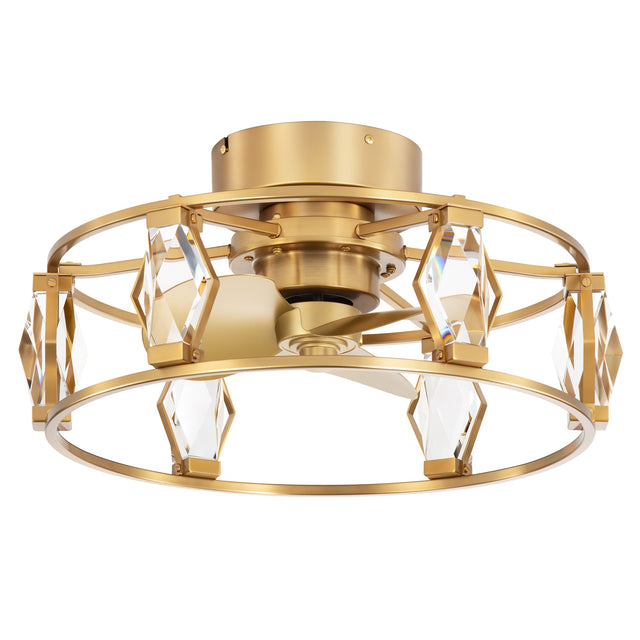
Bare solid brass does darken over time, and unlacquered brass develops a patina; that is why brass polish exists. But polish removes tarnish by taking off a little of the surface. On a gold-tone coating, or on lacquered brass, that same action wears through the finish. The Halcyra 20.8" Crystal Flush Mount Ceiling Fan in gold is a good example: dust the frame and crystals with a soft cloth and use a barely damp cloth only for marks.
If you own an older fan that really is solid brass, follow the original maker's care guidance. Polishing a lacquered brass fan without removing the lacquer usually makes it look worse, not better.
Is Oil-Rubbed Bronze a Living Finish or a Fixed Coating?
On a ceiling fan, treat it as a fixed finish unless the maker says otherwise. Breezary's oil-rubbed bronze listing doesn't describe a living finish.
"Living finish" is a term used mostly for faucets and hardware: an unsealed surface designed to darken and change with handling. Fan finishes are a different case. The Lioren 54-Inch 5-Blade Ceiling Fan is offered as 30032-ORBG, listed as Oil-Rubbed Bronze with Gold Accents, and the listing says nothing about the finish changing with use. Dust it dry, wipe marks with a barely damp cloth, and don't scrub the edges, where rubbing can wear through the dark finish to the lighter accents.
How Do You Clean Matte Black, White, Wood Blades and Glass Shades?
Matte black needs light pressure, white needs mild soap rather than bleach, wood-based blades need a nearly dry cloth, and shades should be cleaned cool and only removed if the manual shows how.
Matte black
Matte black shows pale dust more than smudges. Dust it often with a dry cloth, and don't rub hard on one spot, which can leave a shiny patch on a flat finish.
White
Use water with a drop of mild dish soap for marks. Skip bleach and strong degreasers, which can discolor a painted surface.
Wood, plywood and ABS blades
Wood and plywood blades get a dry or barely damp cloth and are dried at once; never soak them, and skip furniture polish sprays, which leave a film that holds dust. ABS (hard plastic) blades take a damp wipe well. Woven and rattan-style parts are covered in our guide to rattan, wicker and bamboo fan materials.
Glass and acrylic shades
Let the light cool and wipe glass with water and mild soap, then dry it. Acrylic clouds easily, so avoid ammonia-based glass cleaners and solvents on it. For stained or colored glass, see our Tiffany shade glass care guide.
What Should You Never Use to Clean a Ceiling Fan?
Anything abrasive, anything that polishes by removing metal, and any liquid sprayed straight at the motor or light.
| Avoid | Why | Use instead |
|---|---|---|
| Steel wool, scouring pads, melamine sponges | Scratch chrome, cross-grain brushed nickel and burnish matte black | Microfiber cloth |
| Powdered or cream cleansers | Abrasive; can dull or cut through a finish | Water with a drop of mild dish soap |
| Metal or brass polish | Removes surface material; can strip coatings and lacquer | Dry dusting, gentle damp wipe |
| Bleach, ammonia, solvents | Can discolor paint and haze acrylic shades | Mild soap solution, then dry |
| Spray aimed at the fan | Liquid can reach the motor, sockets or LED | Spray the cloth |
If the fan wobbles after cleaning, a blade may have been bent or a screw loosened; our guide on how to balance a wobbling ceiling fan walks through the checks.
Choosing a finish that's easy to keep clean?
View Brushed Nickel Ceiling FansCeiling Fan Cleaning FAQ
Can you use metal polish on a ceiling fan?
Not unless the manual says so. Metal polish works by removing a thin surface layer along with the tarnish. On a plated, painted or lacquered fan finish, that can dull the sheen or wear through to the metal underneath. A dry or barely damp microfiber cloth is the safer choice.
How do you clean a brushed nickel ceiling fan?
Turn the fan off, dust with a dry microfiber cloth, and wipe in the same direction as the brushed lines. For a fingerprint or greasy spot, use a cloth barely damp with water and a drop of mild dish soap, then dry it. Skip scouring cleansers and pads, which can leave marks that cross the grain.
Will a brass or gold ceiling fan tarnish?
Breezary's warm metallic fans are sold as gold-tone finishes, not solid brass, and a gold-tone finish is typically a coating. Treat it as a coating: dust it, wipe it gently and don't use brass polish. If the color seems to change, contact customer service rather than polishing.
Is oil-rubbed bronze a living finish on a ceiling fan?
Don't assume it is. "Living finish" describes an unsealed finish meant to change with use, and Breezary's Lioren 30032-ORBG listing does not describe one. Treat oil-rubbed bronze as a fixed finish: dust and wipe it gently, and don't scrub the gold accents.
What is the best way to clean chrome ceiling fan water spots?
Wipe the spot with a cloth barely damp with clean water, then buff it dry right away with a second dry microfiber cloth. Don't use scouring powder, steel wool or a melamine sponge, which can scratch a polished surface.
Why is my fan wobbling after I cleaned it?
A blade or blade bracket may have been bent or nudged, or a screw may have loosened. Breezary's Chromara manual warns not to bend the blade brackets when cleaning. Turn the fan off, check the screws you touched, and follow a balancing routine if it still wobbles.