
Large Flush Mount Ceiling Fans
Large flush mount ceiling fans sit close to the ceiling, so a big room with a low ceiling can still have a wide fan. They suit flat ceilings around 8 feet or lower. Check each model's span and installed height before you buy. Read the buying guide
6 products
6 products
Products
-
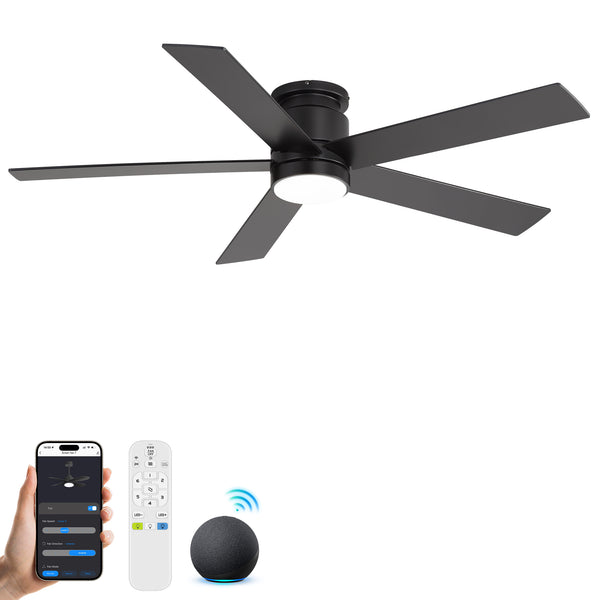
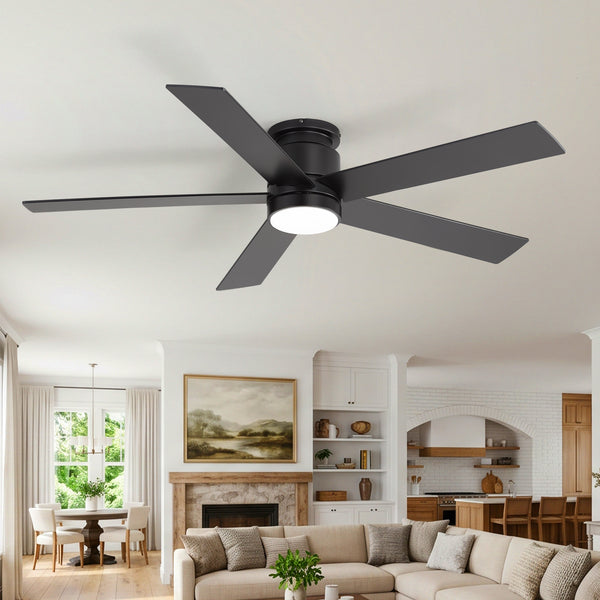
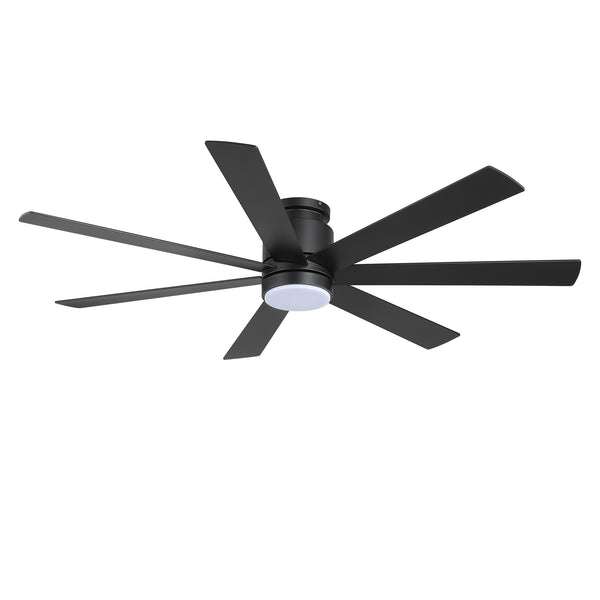
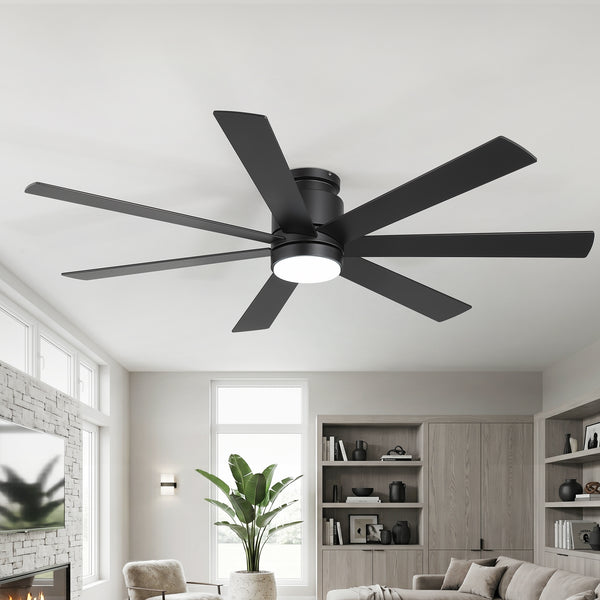
Solvian 52" Crystal Flush Mount Ceiling Fan With Light & Remote
From$119.99
Choose Options$199.00Save 40%
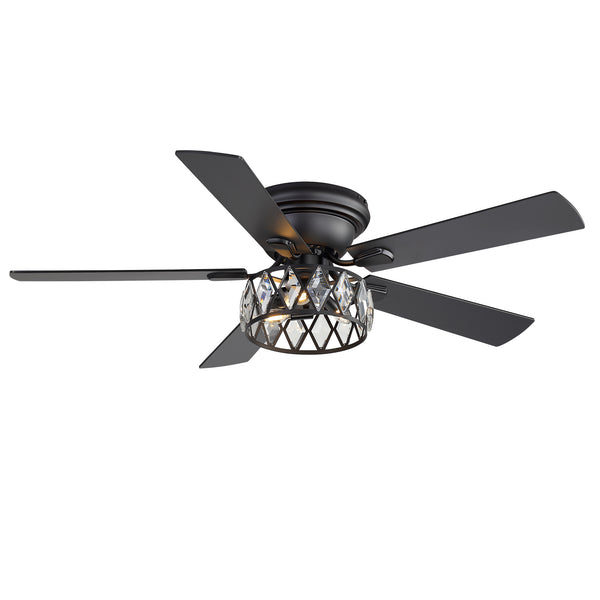
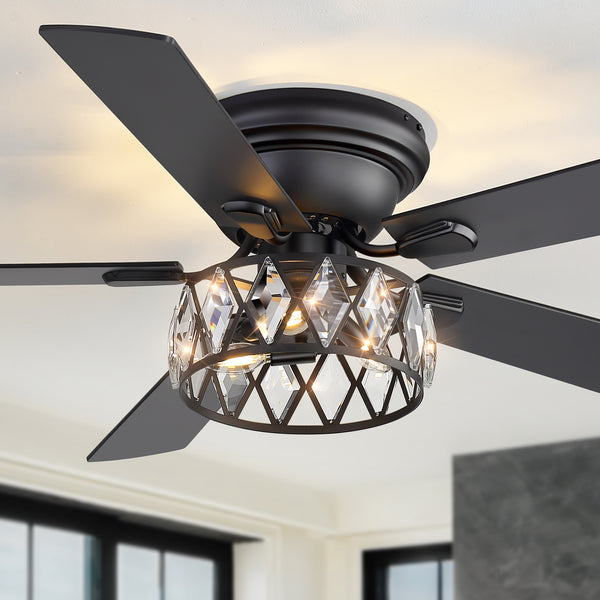
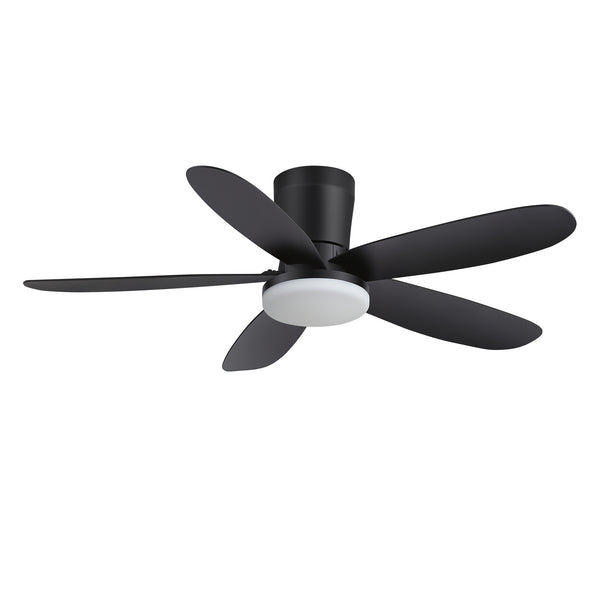
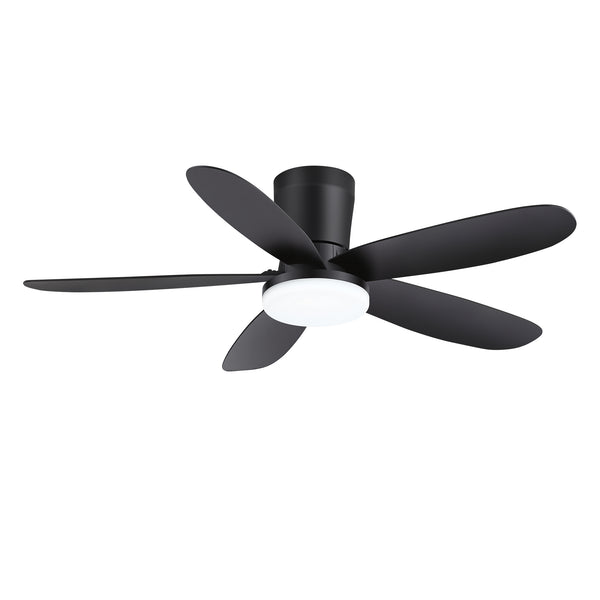
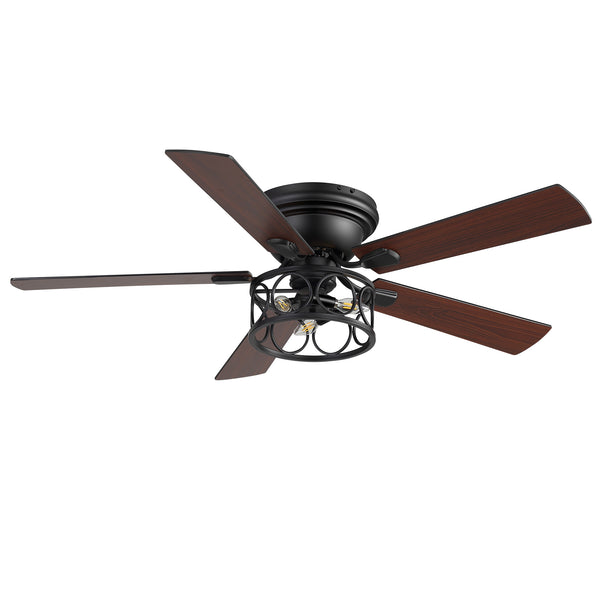
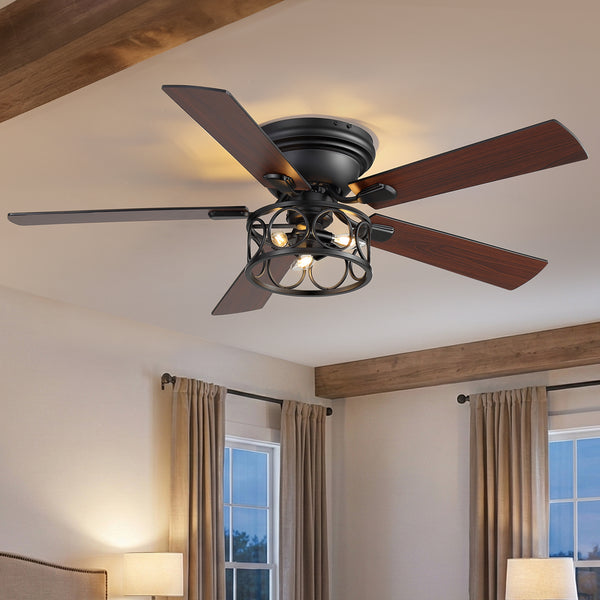
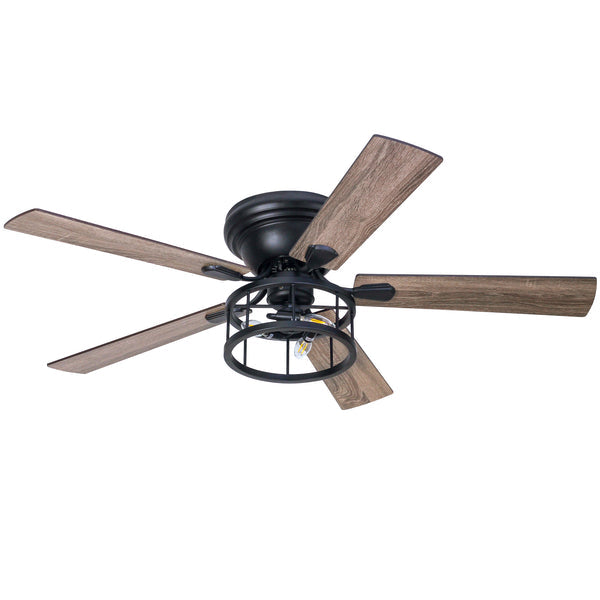
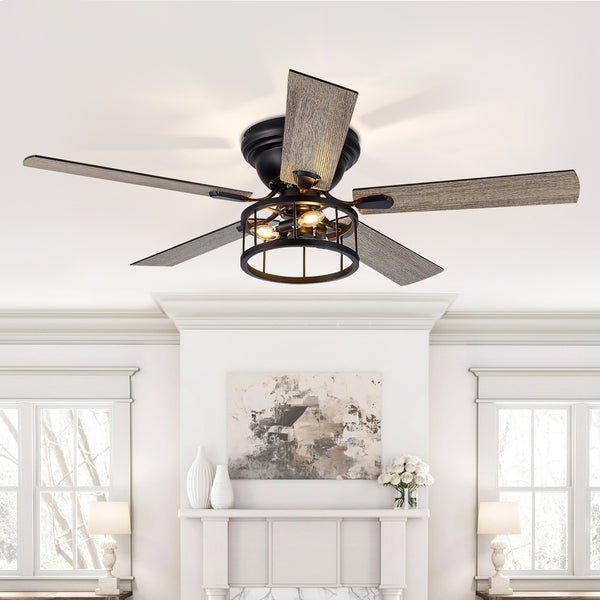
Shop Large Flush Mount Ceiling Fans by Room, Size & Style
Big Fans on Low Ceilings: Limits to Check Before Buying
Large flush mount ceiling fans solve one problem: headroom. They do nothing for the space around the blades, and a wide span on a low ceiling sits close to walls, beams and doors. Check that sideways clearance first. Then confirm the blade height and the lowest point of the light before you settle on a size.
Give a wide span room to turn
On a low ceiling, a 60-inch fan can look dominant and sits closer to everything around it. Check the clearance to walls, beams, tall cabinets and door swings. A small room may not suit a 60-inch fan even when it mounts flush, so size by floor area first.
Know where large starts
This collection treats 60 inches as the start of large. The 52-inch models here are the next size down and sit in the chart's 100–200 and 200–350 sq. ft. bands. In rooms of 350–500 sq. ft., the chart points to 60–72 in., so a 60-inch flush mount is at the small end.
Check both heights, then the light
Work out the blade height and the lowest point with the formulas below, using published dimensions rather than photos. On a wide fan, a deep light kit or shade can hang well below the blades. Over a bed, a table or a walkway, that lowest point decides the fit.
Keep it on a flat ceiling
Flush-mount fans are generally designed for flat ceilings. Don't put one on a sloped or vaulted surface unless its manual approves that mount. On an angled ceiling, a downrod fan with a published slope limit is the safer route, even if headroom is tight.
Plan for dusting and service
The narrow gap above wide blades makes them harder to dust, so read the cleaning advice in the manual. Before you buy, see how the light cover comes off and whether the LED module can be replaced. Also ask how you would reach the remote receiver later.
Choose controls that suit the box
A remote helps when the ceiling box has no separate wall controls for fan and light, and some models add app control. A standard light dimmer is not automatically compatible with an integrated LED fan, so use only the controls its manual approves.
| Height | How to find it |
|---|---|
| Blade height | Ceiling height minus the ceiling-to-blade distance. |
| Lowest point | Ceiling height minus the complete installed height. |
| Blade clearance | No less than 7 feet from the floor. |
Measure from the finished floor, after any new flooring goes down; on a low ceiling, every bit of height counts.
Large Flush Mount Ceiling Fans FAQs
What is considered a large flush mount ceiling fan?
Here, a flush-mount or close-to-ceiling fan with a span of at least 60 inches. There is no single industry definition, and 52- or 56-inch hugger fans are often sold as large elsewhere. Whatever the label, check the span and the approved mounting method on the product page.
What is the largest flush mount ceiling fan?
It changes as product ranges change. Large residential flush-mount fans can pass 60 inches, and 84- or 96-inch specialty fans turn up in search results. Treat a very large fan as flush mount only when its manual confirms that mounting, and check the span on the product page.
Is a 60-inch flush mount fan enough for a 20x20 room?
Usually, at the low end of the range. A 20-by-20-foot room is about 400 sq. ft., which the chart pairs with 60–72 in. fans. If the room is long, divided or open to a kitchen, a second fan may serve it better than a single wider one.
Should a big room with a low ceiling get one fan or two?
Often two, once the room outgrows a single flush-mount fan. For rooms over 500 sq. ft., the chart calls for at least 72 inches, or more than one fan. With flush mounts, two fans placed over separate seating or dining zones may be the practical way to cover it.
How much space does a large flush mount fan need around it?
Enough for the blade tips to clear walls, beams, cabinets and door swings comfortably. There is no single figure for every fan, so follow the clearances in the model's manual. Remember that a wide span on a low ceiling sits closer to everything than the same fan would on a tall one.
Can I make a standard fan flush by removing the downrod?
No, not unless its manual approves a close-to-ceiling setup. Taking the rod off does not turn a downrod fan into an approved flush mount. If you need a low profile, choose a fan built as a flush mount, or a dual-mount model approved for both installations.


